


 Eng
Eng 
 中文简体
中文简体
 Home / News / Industry News / What Are Stamping Metal Parts and Sheet Metal Parts and How Are They Made?
 What Are Stamping Metal Parts and Sheet Metal Parts and How Are They Made?
 2026.03.19
 Industry News
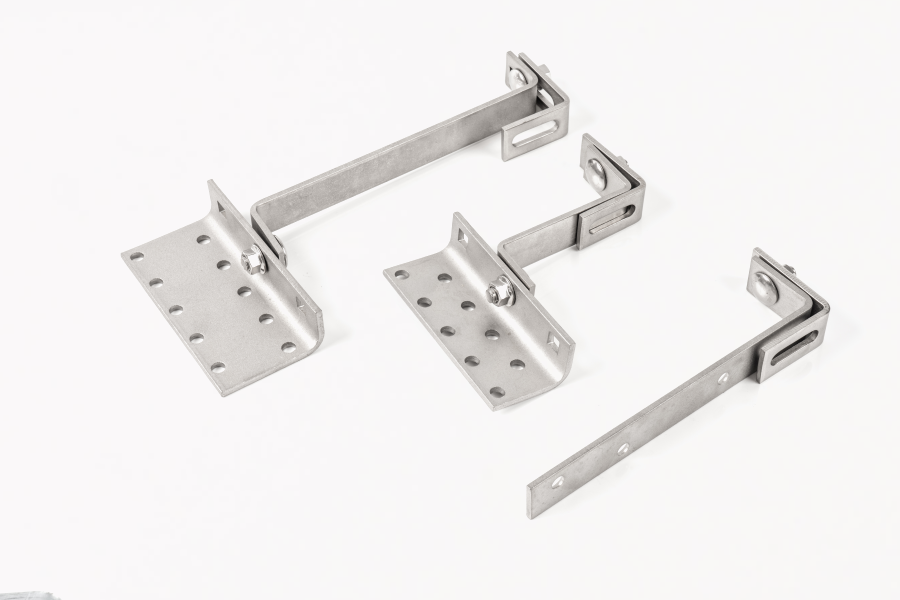
Metal parts formed from flat sheet stock represent one of the most versatile and widely used categories in modern manufacturing. Two terms appear consistently in procurement and engineering discussions: stamping metal parts and sheet metal parts. Stamping metal parts are produced through high-speed press operations that cut, form, and shape flat metal stock into precise components in a single or progressive tooling sequence, making them the dominant choice for high-volume production where dimensional consistency and low per-unit cost are priorities. Sheet metal parts encompass a broader category of fabricated metal components produced from flat stock through any combination of cutting, bending, punching, and forming operations, including both stamped and custom-fabricated work. Understanding the distinction, the manufacturing processes behind each, and the factors that determine which approach suits a given application is essential for engineers, buyers, and product designers who specify metal components at any production volume.
Defining Stamping Metal Parts: Process and Scope
Metal stamping part is a manufacturing process in which flat metal sheet or coil stock is fed into a press equipped with a die set, and the press applies force to transform the flat material into a shaped part. The die set contains upper and lower tool halves that are precision machined to the geometry of the finished part. Each press stroke produces one or more parts, and in progressive die operations, a strip of metal moves through a series of stations within a single die, with each station adding one operation until the finished part is released at the final station.
Core Stamping Operations
Stamping encompasses several distinct operations that may be combined within a single die or performed in sequence across multiple presses:
- Blanking: A punch cuts the flat metal stock into a specific outline shape called a blank. The blank is the starting workpiece for subsequent forming operations or the finished part itself in applications requiring flat components.
- Punching: A punch cuts holes, slots, or notches through the metal sheet. Unlike blanking, in which the removed piece is the desired part, in punching the removed material is scrap and the remaining sheet retains the holes as functional features.
- Bending: A punch forces the metal over a die radius to create angles, flanges, and channels. Bending is the most frequently used forming operation in both stamping and general sheet metal fabrication.
- Drawing: A flat blank is pulled into a die cavity to form a three-dimensional cup, bowl, or shell shape. Deep drawing extends this operation to produce parts with depth significantly greater than their diameter, such as automotive body panels, housings, and cans.
- Coining: An extremely high-pressure operation in which the metal surface is compressed between precisely machined die faces to produce fine detail, close tolerances, and a smooth surface finish. Coining is used for decorative elements, dimensional calibration, and surface marking.
- Embossing: Raised or recessed patterns are formed in the metal surface to add structural stiffness, decorative texture, or identification markings without removing material.
- Flanging: An edge of the blank is bent to create a flange feature that may serve structural, sealing, or assembly functions in the finished part.
Progressive Die vs Transfer Die vs Single Station Operations
The die configuration used determines production rate, part complexity, and tooling cost for stamping metal parts:
- Progressive die stamping: A coil of metal strip feeds continuously through a multi-station die. Each press stroke advances the strip and performs one or more operations simultaneously at each station. Finished parts are separated from the strip at the final station. Progressive die stamping is the most productive method, capable of rates exceeding 1,000 strokes per minute on small precision parts, and is the standard for high-volume connector, bracket, and hardware production.
- Transfer die stamping: Individual blanks are cut first, then transferred mechanically between separate die stations within a single press or across multiple presses. This method handles larger parts that cannot remain attached to a strip throughout progressive forming, such as automotive panels and deep-drawn housings.
- Single station (compound or combination die): A single die performs multiple operations simultaneously in one press stroke. Used for moderate-complexity parts at medium volume where progressive tooling investment is not justified.
Sheet Metal Parts: Broader Scope and Fabrication Methods
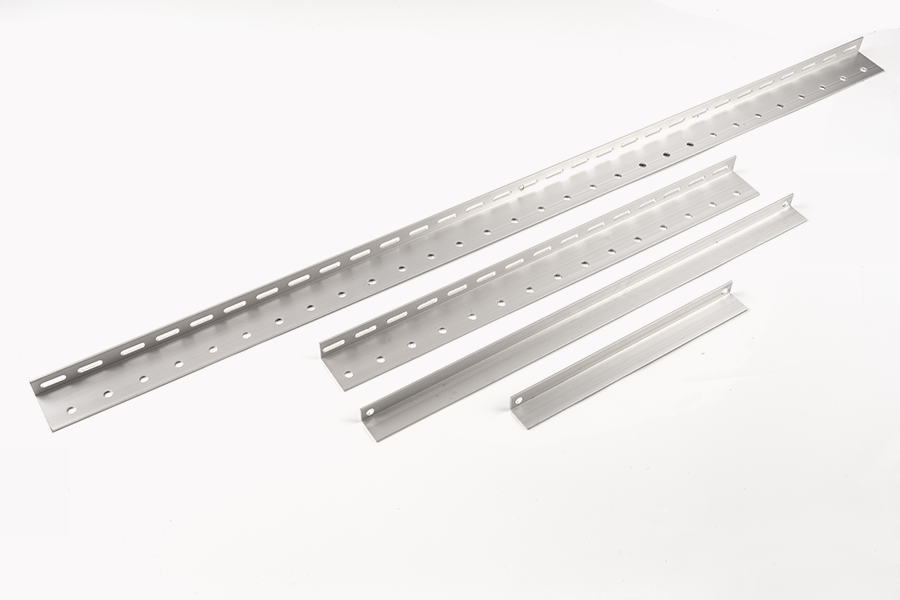
Sheet metal parts is a broader category that includes all components manufactured from flat metal stock, whether produced by stamping, laser cutting, waterjet cutting, CNC punching, press brake bending, or any combination of these methods. While all stamped parts are sheet metal parts, not all sheet metal parts are stamped. The distinction matters in procurement and manufacturing planning because it determines which production methods are being specified, which in turn affects tooling investment, lead time, minimum order quantities, and achievable tolerances.
Laser Cutting and CNC Punching in Sheet Metal Fabrication
Modern sheet metal parts fabrication relies heavily on CNC-driven cutting technologies that require no hard tooling and can produce complex flat profiles directly from digital design files:
- Fiber laser cutting: A high-power laser beam cuts through metal sheet by melting and ejecting material along the programmed path. Fiber lasers can process steel, stainless steel, aluminum, copper, and brass at cutting speeds significantly faster than CO2 lasers, particularly in thin gauge material. A modern 6 kW fiber laser cuts 2 mm mild steel at approximately 25 meters per minute, enabling rapid production of complex blanks without any tooling cost or lead time. Tolerance achievable is typically in the range of plus or minus 0.1 mm on cut edges.
- CNC turret punching: A CNC-controlled turret press holds a library of standard punch and die tooling shapes. The machine positions the sheet and selects the appropriate tool for each feature, punching holes, slots, notches, and forming features in a programmed sequence without custom die investment. Turret punching is faster than laser for hole-intensive parts but slower for complex external profiles.
- Waterjet cutting: A high-pressure water and abrasive mixture cuts through metal without generating heat, which eliminates heat-affected zones and material distortion. Used for materials sensitive to thermal effects and for thick plate cutting beyond laser capacity. Tolerance is typically plus or minus 0.2 to 0.4 mm, slightly wider than laser cutting for thin material.
Press Brake Forming and Its Role in Sheet Metal Parts
After flat blanks are produced by laser cutting, punching, or stamping, most sheet metal parts require bending to achieve their three-dimensional form. The press brake is the primary tool for this operation in custom and medium-volume fabrication. A CNC press brake uses a precision V-shaped punch and die set to apply controlled force at specific positions along the flat blank, bending it to exact angles. Modern CNC press brakes achieve angular tolerances of plus or minus 0.5 degrees or better with appropriate tooling and programming, and can produce complex multi-bend parts from a single flat blank in a single setup through back-gauging and sequential bend programs.
The key limitation of press brake forming compared to stamping is production speed. A press brake requires an operator to position the workpiece, execute the bend, and reposition for each subsequent bend. Cycle time for a part with four bends might be 30 to 90 seconds, whereas a progressive die stamp produces the equivalent geometry at hundreds of parts per minute once tooling is in production. This speed differential is why stamping is preferred at high volume while press brake fabrication dominates at low to medium volume and for prototypes.
Materials Used in Stamping and Sheet Metal Parts Production
Material selection is one of the most consequential decisions in specifying stamping metal parts or sheet metal parts, affecting formability, strength, corrosion resistance, surface finish options, and cost. The most commonly processed materials across both categories are:
| Material | Typical Thickness Range | Key Properties | Common Applications |
|---|---|---|---|
| Low Carbon Steel (CRS/HRS) | 0.4 to 6.0 mm | Excellent formability, weldable, low cost | Brackets, enclosures, automotive body parts |
| Galvanized Steel (SGCC/GI) | 0.5 to 3.0 mm | Corrosion resistant, good formability | HVAC components, roofing, outdoor enclosures |
| Stainless Steel (304 and 316) | 0.5 to 4.0 mm | High corrosion resistance, good strength, aesthetic surface | Food processing, marine, medical, architectural |
| Aluminum (1100, 3003, 5052, 6061) | 0.4 to 6.0 mm | Lightweight, corrosion resistant, good conductivity | Electronics, aerospace, automotive, consumer products |
| Copper and Brass | 0.2 to 3.0 mm | Excellent electrical conductivity, decorative finish | Electrical connectors, terminals, decorative hardware |
| High Strength Steel (AHSS, HSLA) | 0.7 to 3.0 mm | High strength-to-weight ratio, good impact resistance | Automotive structural components, safety parts |
Material Selection Criteria
The decision between material options for stamping metal parts and sheet metal parts typically balances five factors:
- Formability requirement: Deep drawn parts and complex bends require high elongation materials. Low carbon steel grades such as SPCC and DC04 are specifically designated for their drawing quality, with elongation values of 38 to 45% that allow severe forming without cracking. High strength steel grades have lower elongation and require more generous bend radii.
- Environmental exposure: Parts used in outdoor, marine, or food contact applications require inherent corrosion resistance through material selection rather than relying solely on surface finishing. Stainless steel 316 and aluminum 5052 are standard specifications for marine environments.
- Strength-to-weight target: Automotive and aerospace applications drive the use of aluminum and advanced high strength steels to reduce part weight without compromising structural performance.
- Downstream processing compatibility: Welding, plating, anodizing, painting, and powder coating all have material compatibility requirements that must align with the selected base material.
- Cost and availability: Low carbon cold rolled steel is the most cost-effective option for parts without specific environmental or weight requirements. Exotic alloys may deliver superior performance but introduce supply chain risk and cost premiums that must be justified by functional requirements.
Tolerances and Quality Standards in Stamped and Sheet Metal Parts
Dimensional tolerance specification directly affects tooling design, process capability requirements, inspection cost, and ultimately the feasibility of manufacturing a part at a given price point. Understanding what tolerances are achievable by each process prevents the common engineering error of over-tolerancing features, which drives up cost without improving functional performance.
Standard Achievable Tolerances by Process
| Feature Type | Stamping (Progressive Die) | Laser Cutting | Press Brake Bending |
|---|---|---|---|
| Hole position | plus or minus 0.05 mm | plus or minus 0.1 mm | N/A (no holes in bending) |
| Hole diameter | plus or minus 0.03 mm | plus or minus 0.1 mm | N/A |
| Blank profile dimensions | plus or minus 0.05 to 0.1 mm | plus or minus 0.1 to 0.2 mm | N/A |
| Bend angle | plus or minus 0.5 to 1 degree | N/A (no bending) | plus or minus 0.5 to 1 degree |
| Flange length | plus or minus 0.1 mm | N/A | plus or minus 0.3 to 0.5 mm |
| Surface flatness | 0.1 to 0.3 mm per 100 mm | 0.2 to 0.5 mm per 100 mm | 0.3 to 1.0 mm per 100 mm |
Springback and Its Impact on Formed Parts
Springback is the elastic recovery of metal after a bending or forming operation releases the applied force. It is one of the primary sources of dimensional variation in both stamped and press brake formed sheet metal parts. When a metal sheet is bent to a specific angle, it recovers partially toward its original flat position upon tool release, resulting in an actual angle smaller than the formed angle by a springback amount that depends on material yield strength, elastic modulus, thickness, and bend radius. Higher strength steels exhibit significantly more springback than low carbon steel at the same bend parameters, with some advanced high strength steel grades requiring overbending by 10 to 20 degrees to achieve a target angle of 90 degrees after springback. Tooling and process design for stamping metal parts and sheet metal parts must account for springback explicitly to achieve specified angular tolerances.
Tooling Investment and Production Volume Considerations
The economic decision between stamping metal parts and fabricated sheet metal parts is primarily driven by production volume and the relationship between tooling investment and per-unit production cost. Understanding this relationship allows informed decisions about which manufacturing route delivers the best total cost at a specific annual volume.
Stamping Tooling Investment
Progressive die tools for stamping metal parts represent a significant capital investment. A simple progressive die for a small connector or bracket in mild steel might cost $5,000 to $20,000. A complex multi-station progressive die for a precision automotive component in high-strength steel can cost $100,000 to $500,000 or more. Transfer die tooling for large body panels and structural parts falls in a similar range. This upfront cost must be amortized across the total production volume, and the break-even volume below which laser cutting and press brake fabrication is more economical varies with part complexity and die cost. As a general rule, stamping becomes cost-competitive for steel parts at annual volumes above 10,000 to 50,000 pieces, with the break-even point shifting higher as die cost increases and lower as part complexity and cycle time savings increase.
Laser Cutting and Fabrication: Lower Entry Cost for Lower Volumes
Laser cutting and press brake forming require no part-specific hard tooling beyond standard tooling sets already held by the fabrication shop. A new part can be produced from a DXF or step file with zero tooling investment and lead time of 1 to 5 days for prototype or small batch quantities. This makes fabricated sheet metal parts the economically optimal solution for:
- Prototypes and pre-production development parts where design changes are expected
- Low volume production below the stamping break-even threshold
- Custom or configured parts where multiple variants prevent accumulation of sufficient volume for any single stamping tool
- Large parts where the blank size makes progressive die stamping impractical
- Parts in low-volume specialty materials where material cost makes material waste from stamping scrap economically unacceptable
Surface Finishing Options for Metal Stamped and Sheet Metal Parts
Surface finishing serves two primary purposes in stamping metal parts and sheet metal parts: corrosion protection and aesthetic enhancement. The finishing process selected must be compatible with the base material, achievable on the part geometry, and consistent with the functional and environmental requirements of the end application.
Common Finishing Processes and Their Characteristics
- Powder coating: Electrostatic application of dry polymer powder followed by oven curing. Produces a durable, chip-resistant coating available in any RAL or Pantone color. Coating thickness typically 60 to 120 micrometers. Suitable for steel, galvanized steel, and aluminum parts. Not applicable to copper or brass.
- Zinc electroplating: Electrochemical deposition of a zinc layer on steel parts, providing sacrificial corrosion protection. Standard zinc plate thickness of 8 to 12 micrometers meets neutral salt spray requirements of 96 to 200 hours per ASTM B117. Trivalent chromate passivate improves appearance and extends corrosion resistance. Common for fasteners, brackets, and hardware.
- Hot-dip galvanizing: Immersion of steel parts in molten zinc at approximately 450 degrees Celsius. Produces a thick zinc-iron alloy coating of 50 to 150 micrometers with excellent mechanical bonding. Used for structural parts, outdoor hardware, and components requiring long-term atmospheric corrosion protection of 25 to 50 years in typical industrial environments.
- Anodizing: An electrochemical oxidation process for aluminum that converts the surface layer to a hard aluminum oxide. Standard type II anodize produces a layer of 5 to 25 micrometers; hard anodize (type III) produces 25 to 150 micrometers with significantly higher wear resistance. Available in clear, black, and various colors through integral dyeing.
- Electropolishing: An electrochemical process that removes a controlled layer of material from stainless steel surfaces, producing a bright, smooth finish with improved corrosion resistance and reduced surface contamination retention. Standard in food processing, pharmaceutical, and medical device applications.
- Passivation: A chemical treatment of stainless steel in nitric or citric acid that removes free iron from the surface and enhances the natural chromium oxide passive film, improving corrosion resistance without altering dimensions or appearance. Required by many aerospace, medical, and food processing specifications.
Industry Applications of Stamping Metal Parts and Sheet Metal Parts
Stamped metal parts and fabricated sheet metal parts are present across virtually every manufacturing industry. The following survey of major application sectors illustrates the scope and importance of these manufacturing methods:
Automotive
The automotive industry is the largest consumer of stamping metal parts globally. A typical passenger vehicle contains 400 to 600 individually stamped metal components, ranging from large body panels produced on transfer presses to small precision brackets and clips produced on progressive dies. Body-in-white structural components including A-pillars, B-pillars, door rings, floor panels, and roof rails are typically stamped from advanced high strength steel in dedicated transfer press lines. Interior and underbody brackets, reinforcements, and mounting hardware are predominantly progressive die stamped in high-volume runs. The automotive industry has driven many of the most significant advances in stamping technology, including hot stamping (press hardening) for ultra high strength structural parts and servo press technology for precise control of forming speed and force throughout the stroke.
Electronics and Electrical
Precision stamped metal parts are essential components in electronic devices, connectors, and electrical assemblies. Terminal connectors, contact springs, lead frames, EMI shielding cans, and battery contacts are universally produced by high-speed progressive die stamping in copper alloys, brass, phosphor bronze, and stainless steel. Part dimensions in this sector are measured in tenths of a millimeter, and production speeds of 500 to 1,500 strokes per minute are standard on small precision stampings for the electronics market. Sheet metal parts in this sector include server rack enclosures, control panel housings, and electrical cabinet panels, typically produced from galvanized or stainless steel by laser cutting and press brake forming.
Appliances and Consumer Products
Home appliance manufacturing relies heavily on stamped and fabricated sheet metal parts for structural frames, outer panels, inner liners, and functional components such as door hinges, mounting brackets, and motor housings. Washing machine drums, refrigerator inner cabinets, dishwasher spray arms, and oven cavities are all produced from sheet metal using combinations of deep drawing, bending, and roll forming. The visual exterior panels of premium appliances are typically produced from pre-coated steel or stainless steel by stamping to ensure the precise, uniform surface required for visible components.
Construction and Architecture
Sheet metal parts are structural elements in modern construction, including cold-formed steel framing members, roofing and cladding profiles, HVAC ductwork systems, and architectural facade components. These parts are typically produced from galvanized, galvalume, or stainless steel in roll forming operations that continuously form flat coil stock into complex profiles at speeds of 20 to 60 meters per minute. Custom architectural components such as column cladding, entrance canopies, and decorative metalwork are fabricated from laser-cut blanks using press brake forming and welding.
Design Guidelines for Optimizing Stampability and Fabricability
Parts designed without consideration for the manufacturing process they will be produced by are a consistent source of cost overruns, quality problems, and tooling failure. The following design principles apply across stamping metal parts and sheet metal parts fabrication and should be incorporated at the earliest stage of design:
- Specify minimum bend radii correctly for the material and thickness: The minimum inside bend radius for most low carbon steel and aluminum is 0.5 to 1.0 times material thickness. Specifying sharper radii causes cracking in high-strength materials and accelerated die wear in stamping tooling. Use the material supplier's forming limit data as the reference for minimum radius specification.
- Maintain minimum hole diameter relative to material thickness: In stamping, hole diameter should be at least equal to material thickness in steel and 1.5 times material thickness in harder alloys to prevent punch fracture. In laser cutting, holes below 1.0 mm diameter in material thicker than 1.0 mm produce poor edge quality and should be avoided where possible.
- Add relief cuts at bend intersections: Where two bends meet at a corner, a relief cut or notch at the bend intersection prevents material tearing and allows both bends to be formed independently without mutual interference.
- Maintain consistent material thickness within a part: Designing a part to be produced from a single thickness of flat stock simplifies tooling, material procurement, and forming operations. Avoid combinations of thicknesses in a single stamped part unless the design has no alternative.
- Consolidate features where possible for progressive die efficiency: In high-volume stamped parts, combining holes, slots, and forms that can be added in a single progressive die station reduces die complexity and tooling cost. Review the part for any features that could be simplified or eliminated without functional compromise before the tooling design is finalized.
Stamping metal parts and sheet metal parts together represent the foundation of modern metal component manufacturing across virtually every industry. Selecting the right process for a given part comes down to volume, complexity, tolerance requirements, and the balance between tooling investment and per-unit cost over the production lifetime of the component. At high volumes, the speed and consistency of stamping is unmatched. At lower volumes and for complex custom geometry, fabricated sheet metal parts using laser cutting and press brake forming deliver flexibility, speed to market, and cost efficiency that stamping cannot match at equivalent quantities.

 Company Profile
 +86-189-57809418
 Zouxi Village, Tangxi Town, Yinzhou District, Ningbo City, Zhejiang Province, China
Copyright © Ningbo Mingli Electric Technology Co., Ltd. All rights reserved. Custom Hardware Parts Maunfacturers
