


 Eng
Eng 
 中文简体
中文简体
 Home / News / Industry News / How Does Continuous Automatic Punch Press Redefine High Precision Stamping Standards?
 How Does Continuous Automatic Punch Press Redefine High Precision Stamping Standards?
 2026.02.05
 Industry News
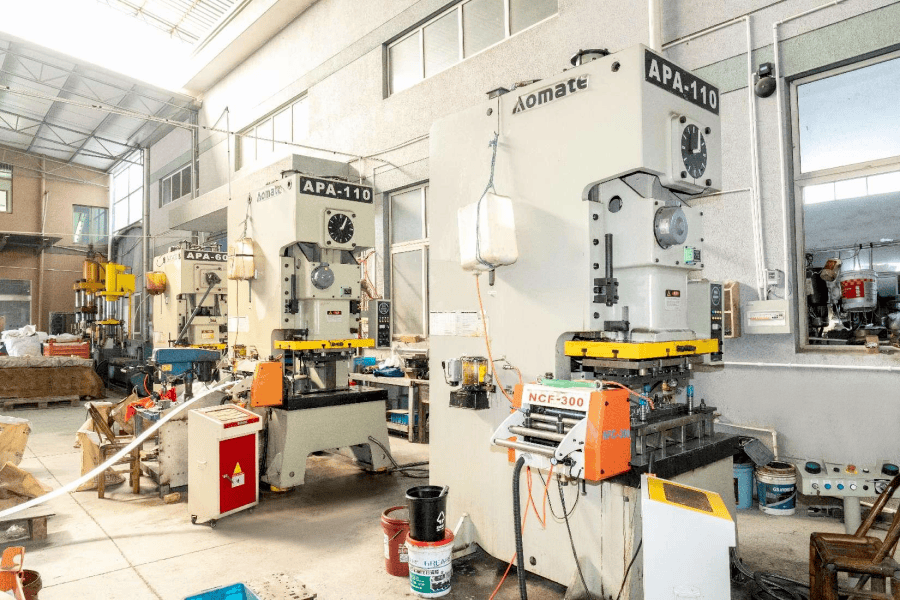
In the field of modern mechanical manufacturing, the demand for component accuracy has reached the micron level. This technical requirement is primarily met through High Precision Stamping, a process that relies on the synergy between advanced tooling and robust machinery. Central to this process is the Continuous automatic punch press, a high-performance system designed to deliver consistent force and rapid cycle times. By integrating automated feeding mechanisms with high-tonnage stability, the Continuous automatic punch press ensures that every stroke contributes to a perfect finished product, maintaining the integrity of complex geometries.
Why Is High Precision Stamping Critical for Modern Components?
The complexity of modern electronic and automotive parts requires a manufacturing method that can produce intricate shapes with zero margin for error. How does High Precision Stamping address these needs?
How does it ensure dimensional stability? High Precision Stamping utilizes ultra-hard alloy dies and high-frequency vibrations to shape metal sheets. Because the material undergoes controlled deformation, the internal stress is minimized, ensuring that the dimensions of the part remain stable even after the stamping process is complete. This is particularly vital for connectors and lead frames where even a 0.01mm deviation can lead to assembly failure.
Can it handle ultra-thin materials? One of the hallmarks of High Precision Stamping is its ability to process foils and thin metal strips without tearing or warping. By precisely controlling the clearance between the punch and the die, the system achieves clean shear edges. When coupled with a Continuous automatic punch press, the material flow is monitored in real-time, allowing for the mass production of miniature components used in aerospace and medical devices.
What Features Make the Continuous Automatic Punch Press Essential?
A manual press cannot match the output quality required for today’s industrial standards. What specific technical attributes does a Continuous automatic punch press bring to the factory floor?
How does the automation system improve throughput? The "continuous" aspect of the Continuous automatic punch press refers to its ability to cycle indefinitely as long as raw material is fed into the system. Equipped with high-speed feeders, the press coordinates the movement of the metal strip with the vertical motion of the ram. This synchronization eliminates the pauses associated with manual loading, allowing for thousands of strokes per hour while maintaining the rigorous standards of High Precision Stamping.
Is the structural rigidity sufficient for heavy-duty tasks? To achieve High Precision Stamping, the machine frame must resist deflection. The Continuous automatic punch press is typically constructed with a high-rigidity cast iron frame or a welded steel structure that has undergone stress-relieving heat treatment. This ensures that even under maximum tonnage, the alignment between the upper and lower bolsters remains perfect, preventing tool wear and ensuring the longevity of the expensive stamping dies.
|
Technical Parameter |
Specification Value |
Performance Impact |
|---|---|---|
|
Stroke Accuracy |
±0.002 mm |
Ensures consistent High Precision Stamping quality |
|
Feeding Speed |
Up to 1200 SPM |
Maximizes the efficiency of the Continuous automatic punch press |
|
Material Thickness |
0.05 mm - 3.5 mm |
Provides versatility for various industrial components |
|
Drive System |
Servo-Driven Motor |
Allows for variable stroke profiles and energy saving |
|
Cooling Method |
Forced Oil Lubrication |
Prevents thermal expansion during long-run operations |
How Does the Integration of These Technologies Reduce Waste?
Material costs represent a significant portion of manufacturing expenses. How do High Precision Stamping and the Continuous automatic punch press optimize resource utilization?
Can the system minimize scrap rates? By using nested layouts and precise strip layouts, High Precision Stamping ensures that the maximum number of parts is harvested from a single roll of metal. The Continuous automatic punch press plays a role here by using optical sensors to detect the position of the strip. If the material shifts by even a fraction of a millimeter, the system automatically adjusts the feed length, preventing "mis-hits" that result in wasted material.
Does it lower the energy consumption per part? Modern Continuous automatic punch press units often utilize regenerative drive systems. During the deceleration phase of the stroke, energy is captured and reused for the next cycle. This efficiency, combined with the high speed of High Precision Stamping, means that the energy cost per individual component is significantly lower than that of traditional hydraulic or manual pressing methods.
Can High Precision Stamping Handle Complex Multi-Stage Processes?
Many parts require more than a single hit to reach their final form. How does the equipment manage sequential operations?
How does a progressive die work with the press? In a typical setup, the Continuous automatic punch press is fitted with a progressive die. As the material moves through the machine, it undergoes different stages of High Precision Stamping: piercing, blanking, bending, and coining. Each stroke of the press completes one stage for multiple parts simultaneously. By the time the strip reaches the end of the press, a fully formed, high-precision component is ejected.
Is the synchronization of multi-stage stamping reliable? The reliability comes from the precision timing of the Continuous automatic punch press. The mechanical or electronic cams control the timing of the pilot pins, which lock the material into the exact position before the punch makes contact. This ensures that the features added in the fifth stage of the High Precision Stamping process are perfectly aligned with the holes punched in the first stage.
How Does Maintenance Affect the Longevity of the Punch Press?
For a machine that operates at hundreds of cycles per minute, wear and tear are inevitable. How is the Continuous automatic punch press maintained to preserve High Precision Stamping quality?
What role does automatic lubrication play? To prevent friction-related heat, the Continuous automatic punch press is equipped with a centralized lubrication system. This system delivers a precise amount of oil to the bearings, slides, and guideways at set intervals. By keeping the moving parts cool and lubricated, the machine maintains the tight tolerances required for High Precision Stamping over years of continuous operation.
Are there sensors to detect tool breakage? High-end Continuous automatic punch press models include acoustic and force sensors. If a punch breaks or a piece of scrap (slug) gets pulled back into the die, the sensors detect the change in the vibration signature or the sudden spike in tonnage. The machine performs an emergency stop within milliseconds, protecting both the workpiece and the delicate High Precision Stamping tooling from catastrophic damage.
Does the Servo Drive Enhance High Precision Stamping?
The shift from flywheels to servo motors has changed the capabilities of stamping. How does this benefit the Continuous automatic punch press?
Can the stroke profile be customized? Unlike traditional mechanical presses, a servo-driven Continuous automatic punch press allows the operator to program the speed and position of the ram throughout the stroke. For certain High Precision Stamping tasks, such as deep drawing or fine blanking, it is beneficial to slow down the punch just as it contacts the material. This reduces the impact shock and allows the metal to flow more naturally into the die cavity.
Does this flexibility improve part quality? Yes. By optimizing the velocity, the Continuous automatic punch press reduces the "snap-through" effect that occurs when the metal finally shears. This results in smoother edges, less burr formation, and a higher overall quality for the High Precision Stamping product. Furthermore, the ability to hold pressure at the bottom of the stroke allows for precise coining and embossing, which is often required for high-security or decorative components.


 Company Profile
 +86-189-57809418
 Zouxi Village, Tangxi Town, Yinzhou District, Ningbo City, Zhejiang Province, China
Copyright © Ningbo Mingli Electric Technology Co., Ltd. All rights reserved. Custom Hardware Parts Maunfacturers
