


 Eng
Eng 
 中文简体
中文简体
 Home / News / Industry News / Sheet Metal Bending Near Me: A Buyer's Guide to Quality and Cost-Effective Parts
 Sheet Metal Bending Near Me: A Buyer's Guide to Quality and Cost-Effective Parts
 2026.09.24
 Industry News
Searching "sheet metal bending near me" usually begins with a specific part. It may be a mounting bracket for an electrical enclosure, a chassis panel for a new machine, or a dozen prototype covers that need to be on a test bench before the end of the month. The search returns local fabricators, full-line metal service centers, and online quoting platforms. Each one promises fast delivery, accurate bends, and reasonable pricing. The problem is that the difference between a usable part and a rejected batch rarely shows up in the search results.
This guide takes the point of view of a buyer who has run that process more than once. It starts with the actual mechanics of sheet metal bending, then looks at what local shops do well and where their limits begin to cost you money. It explains tolerances, materials, and design rules that determine price, and it closes with a scenario many purchasing teams eventually face: the part is relatively simple, the volumes are real, and the strongest quote comes from a manufacturer on the other side of the world. Before you compare prices, it helps to compare capabilities, because a bending job is only cheap when the supplier can actually hold the geometry you specify.
What Sheet Metal Bending Actually Involves
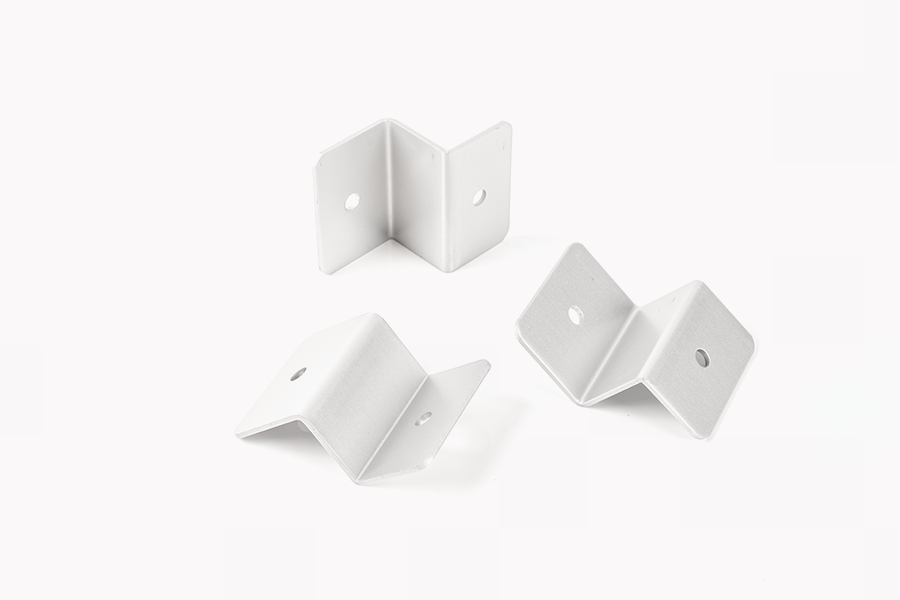
When a shop quotes a sheet metal bending job, it is quoting much more than the act of pressing a sheet along a straight line. Most bent parts start as a flat blank that is cut, punched, or laser-profiled before it ever reaches the press brake. The brake itself holds a bottom V-die and an upper punch. The flat blank sits on the die, the punch descends, and the sheet deforms plastically around the die opening. The angle, radius, and final dimensions depend on the tool geometry, the material thickness and hardness, and the forming method the operator chooses.
Three forming methods dominate production. Air bending is the most common: the sheet contacts the two edges of the V-die, and the punch pushes it only partway into the opening. The achieved angle is controlled by punch depth, which means one die set can produce many different angles. It is flexible, requires relatively low tonnage, and is the standard choice for most custom fabrication. Bottoming presses the sheet fully into the die so that the material takes the shape of the die cavity. Accuracy improves to roughly ±0.5 degrees, but tooling must match the required angle and tonnage rises. Coining goes a step further by squeezing the material between punch and die until it permanently takes their shape. It gives the best accuracy but also the highest tooling pressure and wear, and it is rarely justified unless the part demands near-absolute angular repeatability. For most commercial work, a skilled press brake operator using air bending will hold angles to ±1 degree without much difficulty.
Two machine specifications define what a shop can physically produce. Tonnage determines how thick a material the brake can form; bed length limits how long a bend line can be. A 100-ton press brake with a 3-meter bed is a common workhorse for parts in the 0.5 to 6 mm range. If your part includes a 2.5-meter long flange in 6 mm stainless steel, the job needs both sufficient tonnage and enough bed length, and not every local shop has either. Springback also matters: the sheet tries to return toward its original shape after the punch releases, and harder or thicker material springs back more. Experienced shops compensate by overbending slightly, which is why the name above the press brake matters as much as the specification sheet of the machine.
Why "Near Me" Helps, and Where It Stops Helping
Local capacity has real advantages. Freight is cheap and fast, communication happens during the same working hours, engineering questions can be answered on a visit to the shop floor, and small quantities or urgent prototypes can turn around in days rather than weeks. If your part uses common material, the flat pattern is simple, and the quantity is a dozen to a few hundred pieces, a competent shop twenty minutes away is almost always the best answer. The word "competent" carries the weight here.
Then the limits appear. A small shop running one or two press brakes may handle a compact bracket perfectly, but the moment your order includes a long panel, a thick stainless plate, a tight inside radius, or an angular tolerance tighter than one degree, you will hear "we can try" more often than "we do this all the time." Many local shops are specialized. One may focus on light HVAC ducting and door frames; another may be a precision job shop serving aerospace customers. Both can appear in the same search results for "sheet metal bending near me," but they quote the same drawing in completely different ways, because their tooling, inspection habits, and cost structures are different.
Secondary operations widen the gap. A bending-only shop will send your part out for welding, tapping, hardware insertion, or powder coating, which adds logistics, lead time, and quality risk. If the local quote depends on three subcontractors to make one part, you are carrying all the coordination risk. Capacity is another hidden constraint: a shop might be excellent but fully booked for six weeks, and no amount of proximity fixes a schedule problem. Geography, in other words, does not equal capability. The radius of a "near me" search is an arbitrary limit imposed by a search engine, not a requirement written on your drawing. It is a reasonable place to start the search, but it should not be the only criterion in the decision.
How to Shortlist a Shop Before Asking for a Quote
The fastest way to be disappointed is to send one drawing to three shops and compare only the final price. Set a screening list before requesting quotes. The categories below cover the points that separate a shop that can produce your part well from one that will struggle through every order. Ask direct questions and ask for specifics: a machine list, a sample part, an inspection report, a list of industries they already serve. A confident fabricator will answer without hesitation.
| Screening area | What to confirm | Why it matters |
|---|---|---|
| Press brake fleet | Tonnage, bed length, number of CNC axes | Defines whether the shop can physically form your bend lengths and thicknesses. |
| Tooling inventory | Standard V-die range, punch radii, custom dies available | Determines attainable inside radius and whether special tooling costs will appear on the quote. |
| Material handling | Stocked grades and thicknesses, or confirmed mill access | A shop without the right material passes cost and lead time on to you. |
| Upstream processes | Laser cutting or punching in-house | Bent parts need flat blanks first; in-house cutting shortens lead time and reduces handling damage. |
| Secondary operations | Welding, tapping, threaded inserts, hardware pressing | Avoids subcontracting steps that add cost, logistics, and quality risk. |
| Inspection | Protractors, height gauges, CMM, documented reports | Bend accuracy is invisible unless someone verifies it before the part ships. |
| Quality system | ISO 9001 or equivalent management system | Evidence of process control, not just a plaque on the wall. |
| Ordering terms | Minimum order quantity, prototype lead time, production lead time | Aligns expectations before engineering time is spent on fixture or tooling design. |
Do not stop at the list. Ask for a reference part that resembles yours in material and thickness, and ask what tolerance they held on it. If the answer comes back with a specific number and an inspection method, the shop has thought about the problem. If the answer is vague, the quote will be vague too.
Materials and Thicknesses That Bend Well
The material line on a bending quote is where cost and feasibility intersect. Four groups dominate the press brake: low-carbon steel, stainless steel, aluminum, and coated or pre-painted products. Each has a different reaction to forming, and each carries a different price and availability profile. The table below summarizes what to expect when you specify a common grade.
| Material group | Typical thickness | Bending notes |
|---|---|---|
| Low-carbon steel (cold-rolled or hot-rolled) | 0.5–6 mm | Bends predictably with stable springback; the most economical choice for structural parts. |
| Stainless steel 304 | 0.5–4 mm | Higher tonnage and more springback; work-hardens quickly; suited to food, medical, and corrosion-resistant parts. |
| Stainless steel 316/316L | 0.5–4 mm | Better chemical resistance; slightly harder to form than 304 and requires more force. |
| Aluminum 5052 | 0.6–5 mm | Excellent bend quality with stable springback; a common choice for enclosures and panels. |
| Aluminum 6061-T6 | 1–5 mm | Higher strength but prone to cracking at tight radii; specify a larger inside radius or accept a forming limitation. |
| Galvanized steel | 0.5–2.5 mm | Zinc coating can flake at the bend line; watch for edge protection and tooling wear. |
| Pre-painted steel | 0.4–1.5 mm | Paint may micro-crack on tight radii; handling must protect the visible finish. |
Thickness matters more than most buyers realize because the required bending force scales roughly with the square of material thickness. Doubling the thickness can require more than double the tonnage. In addition, the V-die opening is typically selected at six to ten times the material thickness, so a shop set up for decorative sheet metal work may have excellent tooling for 1 mm material but nothing suitable for an 8 mm plate. If you are sourcing in production volumes, also ask about material sourcing. A manufacturer with a production base and large annual tonnage can buy coil stock directly, which stabilizes both price and lead time in a way that a small fabricator buying from a local distributor cannot match.
Tolerances, Springback, and Bend Parameters to Get Right
Most bending tolerances fall into two groups: angular and linear. Angular tolerance describes how close the final bend angle comes to the drawing callout. A ±1-degree tolerance is normal for air bending, and ±0.5 degrees is achievable with bottoming or careful process control. Linear tolerances apply to the distance between bends, the location of a formed edge, or the position of a hole relative to a bend line, and they are controlled by the back gauge, the bend allowance calculation, and the consistency of the material thickness. A well-equipped shop holds ±0.1 to 0.3 mm on most formed dimensions without heroic effort. The moment you specify tighter values, you are paying for extra inspection, rejected parts, and process experiments.
| Parameter | Typical value | Effect on cost |
|---|---|---|
| Angular tolerance | ±1° air bending; ±0.5° bottoming | Tighter than ±0.5° means more inspection and a higher reject rate. |
| Inside radius | 0.5–1× material thickness | Smaller radii increase stress on the material and may cause cracking in aluminum or hard steel. |
| Minimum flange height | 4–6× material thickness, tool-dependent | Shorter flanges require special tooling or become impossible to form cleanly. |
| Hole-to-bend distance | At least 2× thickness plus the inside radius | A hole too close to the bend line distorts into an oval and loses position. |
| Edge-to-bend distance | At least 2× material thickness | Prevents tearing at the free edge of the part. |
| Bend width or flange length | Limited by tooling and press brake bed length | Very narrow or very long bends restrict which machines can run the part. |
The flat pattern calculation is a frequent source of disagreement between buyer and supplier. The developed blank size depends on the bend allowance, which is influenced by material thickness, inside radius, and the forming method. If the customer and the fabricator use different assumptions, the finished part will have the correct nominal angles but the wrong overall width. That is why a mature supplier sends a flat-pattern or DFM review before cutting material. It is also why tolerance management deserves a disciplined, documented approach; the sources of dimensional variation in formed parts are well understood, but they must be controlled deliberately on the shop floor. Shops that treat every dimension as a suggestion produce parts that do not stack, weld, or fit correctly downstream.
Design Rules That Keep Bends Affordable
Affordable bent parts are designed before they are quoted. A few simple rules remove most of the problems that drive up tooling cost and inspection time. If your drawing is already in production, these same rules help you understand why a part costs what it costs.
Keep Flange Heights Above the Minimum
- Minimum flange height is usually about four to six times the material thickness, depending on the die width; confirm the limit with your supplier.
- A flange that is too short forces custom tooling, hand bending, or a secondary operation.
- If you must design a short flange, note it on the drawing and ask the shop for a tooling review before production starts.
Give Holes and Slots Room Away From the Bend
- The edge of a hole should be at least two material thicknesses plus the inside radius away from the bend line.
- Holes closer than that distort into ovals as the material flows during forming.
- Threaded holes and hardware locations should be farther still, because the surrounding material must remain flat enough for a fastener to seat correctly.
Standardize Radii and Angles
- Use one inside radius per part wherever possible; changing radius means changing the punch.
- Stick to common angles such as 90, 45, and 30 degrees unless function requires something else.
- An inside radius equal to the material thickness is a good default that avoids cracking and keeps tooling standard.
Specify Only the Tolerances You Actually Need
- Tight angular tolerances increase inspection time and the probability of rejection; keep ±1 degree unless the assembly demands more.
- Dimension critical holes from the bend datum instead of stacking distances from multiple edges.
- If a tolerance is not marked, the shop will use its own standard; make sure that standard matches your functional requirements.
Each of these rules reduces tooling, handling, or inspection time. None of them limits good design. They simply keep the part inside the envelope where a press brake operator can produce the same result hour after hour.
How Bending Costs Are Built Up
A sheet metal bending quote is composed of clear layers. Understanding them is the best way to compare quotes fairly and to see where savings can be found. The table below lays out the main drivers and the practical levers a buyer can pull.
| Cost driver | How it behaves | What a buyer can do |
|---|---|---|
| Material | Scales with area and thickness; coil buying changes the unit price | Choose standard grades and widths; review nesting efficiency to reduce waste. |
| Tooling | Standard dies are included in most quotes; custom radii and special punches are extra | Use common radii; group similar parts to share one tooling set. |
| Setup | The first part of a run costs the same whether you make one piece or one thousand | Batch orders and repeat orders divide the setup cost across more pieces. |
| Number of bends | Every bend consumes a press stroke and a handling step | Consolidate features where possible; evaluate stamping if volumes are very high. |
| Operator and inspection time | Complex sequences and tight tolerances slow production | Simplify geometry and keep the work with one qualified supplier. |
| Secondary operations | Welding, tapping, inserts, and coating are often the largest cost beyond forming | Source assemblies from one supplier to reduce handling and logistics loss. |
| Packaging and freight | Volume, weight, and palletization drive cost; ocean versus air freight is a large step change | Ask the supplier to propose a packed Incoterm that fits your warehouse and customs flow. |
For small quantities, setup and tooling dominate the unit price; for large quantities, material and the number of bends dominate. A custom die set is charged as non-recurring engineering, but it can be amortized across the order. A shop that explains its tooling amortization logic is a shop that understands production costing. It is also worth knowing that the same part can often be produced on a stamping press instead of a press brake. Stamping forms the metal with a dedicated die in a single stroke, which makes the unit cost much lower at volume. That crossover point is where a job shop and a manufacturer will quote very different numbers, and it is a major reason to keep both options in your evaluation.
When an Overseas Manufacturer Is the Better Option
At some point in a serious buying process, the question becomes: what if the best quote is nine thousand kilometers away? Offshore sourcing is not a desperate fallback; it is a deliberate strategy with well-defined advantages. It makes sense when the local shop is booked out for weeks and you need a steady monthly volume. It makes sense when the integrated cost of bending, finishing, welding, and hardware runs 20 to 40 percent higher at home than it does from a manufacturer with lower overhead and direct material access. And it makes sense when the part needs several processes at once: bending, stamping, threading, plastic inserts, and welding are better done inside one plant than distributed across three subcontractors.
The trade-offs are real and manageable. Ocean freight adds three to five weeks to the lead time. Incoterms, customs brokerage, and payment terms are different from domestic purchasing. Communication spans time zones, so the data package has to be better: complete drawings, explicit tolerance notes, surface finish specifications, and packaging requirements. The risk can be controlled with the same discipline used for any serious supplier. Request a design-for-manufacturing review before production. Approve a first article and measure it independently. Place a pilot order before scaling, and agree on sampling and inspection reports. For buyers new to fabricated sheet components, understanding why these parts matter and how they behave across industries is a useful foundation before you send an inquiry to a distant supplier.
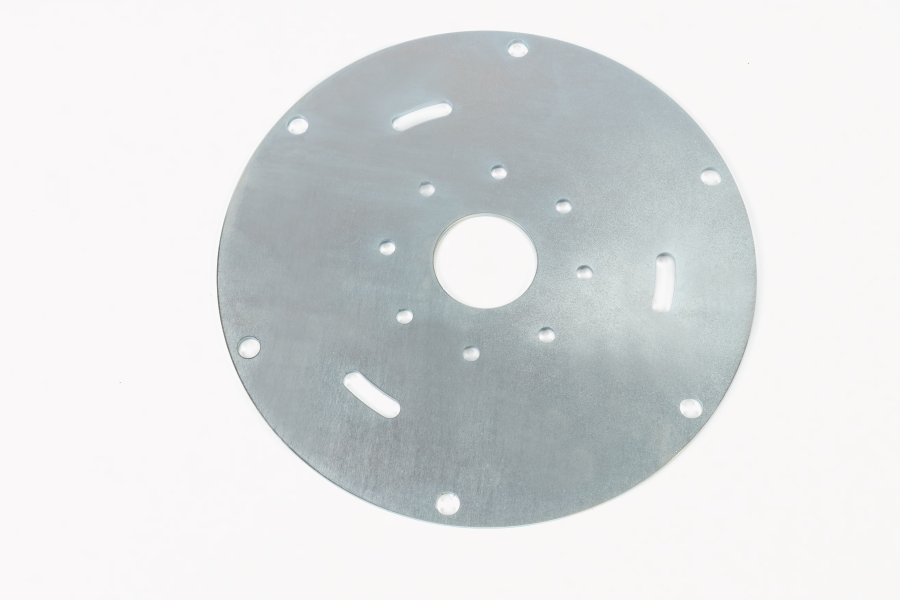 Sheet Metal Fabrication Services from Ningbo MingliThis manufacturer offers full sheet metal fabrication including laser cutting and welding, with in-house production and export experience to multiple regions, making it a viable partner for offshore sourcing.View Product →
A well-managed offshore relationship converts a price advantage into a supply advantage. The same part that costs more locally can be delivered at a lower unit price with documented quality, but only if the drawing is complete, the tolerance strategy is agreed in writing, and the supplier has the production depth to execute without constant intervention.
What an Integrated Manufacturer Like Mingli Brings to the Table
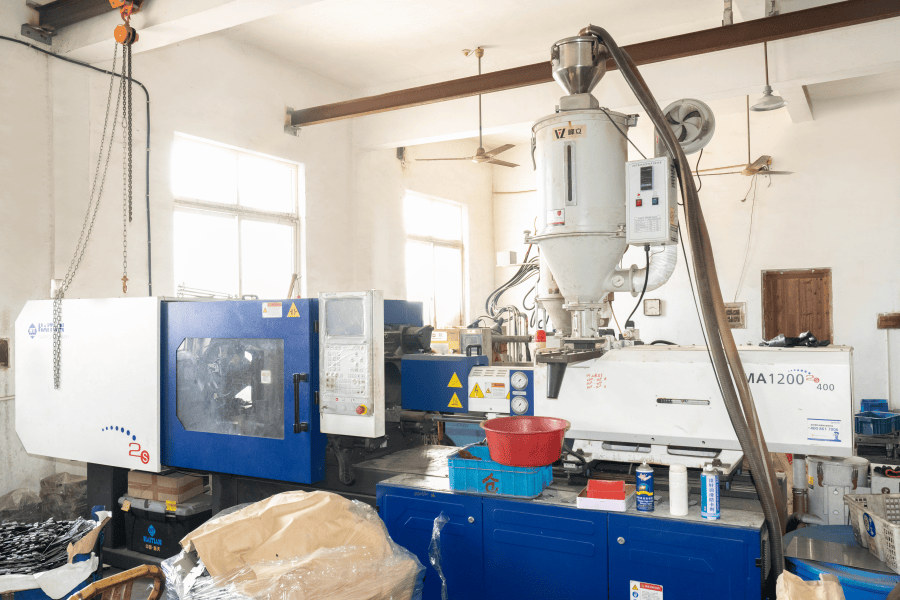
Ningbo Mingli Electric Technology Co., Ltd. is a medium-sized manufacturer founded in 2017 and based in Ningbo, Zhejiang Province, about 25 kilometers from Ningbo Port. The company employs more than 50 people, reports an annual output of over 5,000 tons of metal parts, and has accumulated eight years of experience serving export customers in Europe, the Americas, Southeast Asia, and the Middle East. It operates as a manufacturer with its own production base and an international trade team, which means the people who quote your job work under the same roof as the people who produce it.
For a buyer coming from a "near me" search, the meaningful fact is the connection between processes. Mingli lists five in-house technologies: high-precision stamping, internal thread processing, plastic processing, sheet metal processing, and welding. A chassis part with a stamped carrier, bent flanges, welded brackets, and threaded inserts can be handled under one roof. The company develops products according to customer drawings or samples and describes its service scope as running from design, through production, to packaging. That integrated structure removes the subcontracting loop that inflates cost and delay when a part needs both bending and other operations.
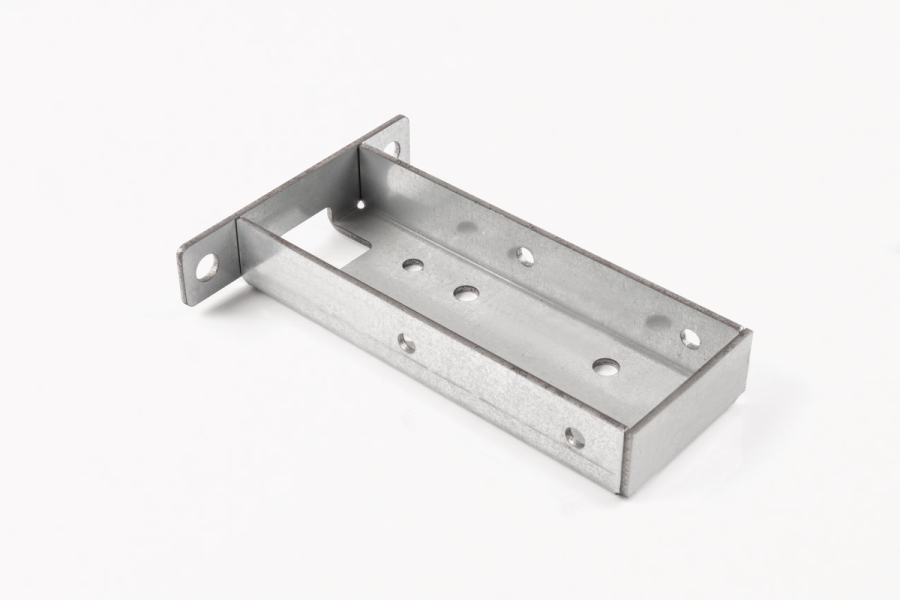 High-Precision Metal Stamping and Multi-Process ManufacturingMingli combines stamping with internal threading, plastic processing, sheet metal work, and welding under one roof, ideal for buyers who need multi-operation parts without subcontracting delays.View Product →
Volume largely determines whether a press brake or a stamping press is the right tool. When quantities cross into thousands of identical parts per month, a press brake becomes uneconomical because every stroke is a separate operation. A stamping die forms the part in one stroke with far better consistency. Mingli's high-precision stamping capability covers that crossover, which is why the company can quote a bending job, a stamping job, or a combination of both without pushing a customer toward the wrong process. The same plant can also add internal threads, plastic components, and welded joints, so the buyer manages one supplier instead of several.
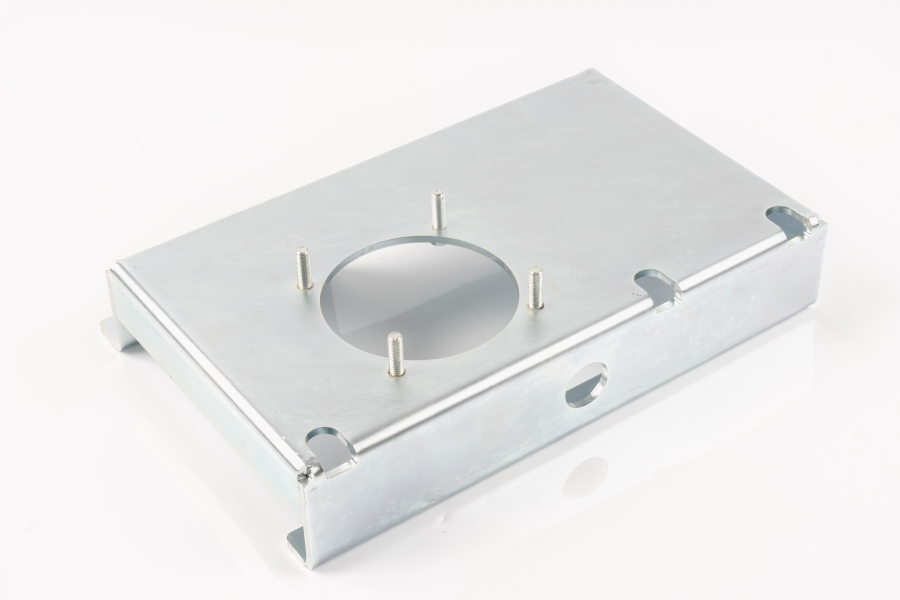 Complete Fabricated Assemblies with Integrated Finishing ServicesOffering laser cutting, stamping, welding, fastener installation, painting, and plating, this supplier can deliver close-tolerance assemblies while maintaining quality control and proximity to Ningbo Port.View Product →
Quality control is presented as a core commitment: the company states that it strictly implements international quality management systems so that every product meets customer requirements and international standards. For a buyer, the practical implications are tangible. A first article can be approved before mass production, inspection reports can accompany each shipment, and the factory's position near Ningbo Port keeps sea freight efficient to major markets. None of this eliminates the need for a complete drawing and a clear specification, but it does mean the supplier has the structural depth to respond to serious orders.
A Practical Sequence: From Search to Purchase Order
Whether you end up with a shop around the corner or a manufacturer on the other side of the world, the decision process should follow the same disciplined sequence. Skip a step and you will pay for it later in rework, delays, or parts that do not fit.
- Define the part completely: material, thickness, surface finish, angular and linear tolerances, annual quantity, packaging expectation, and delivery schedule.
- Request quotes from two or three screened local shops; ask explicitly about tooling, tolerances, and secondary operations.
- Identify the gap that disqualifies the local option, whether it is price, capacity, capability, or lead time.
- Send the same complete data package to two or three overseas candidates, including a design-for-manufacturing review request.
- Evaluate the first article rather than the quote alone; measure angles, radii, hole positions, and surface condition against the drawing.
- Place a pilot order before scaling, and agree on sampling levels, inspection reports, and a corrective-action process for any deviation.
The "near me" search is a rational starting point. Local speed, easy communication, and low freight are genuine advantages that no distant supplier can fully replicate. But the final decision should be made by the part's requirements, not by the radius of a search result. Define the part, screen the shop, understand the cost drivers, and keep the production quantity honest. If a capable local shop wins the evaluation, you save time and simplify logistics. If an integrated manufacturer like Mingli wins, you save money at a predictable quality level with a single accountable partner. The suppliers who help you do the math transparently are the ones worth working with, regardless of where they are located.
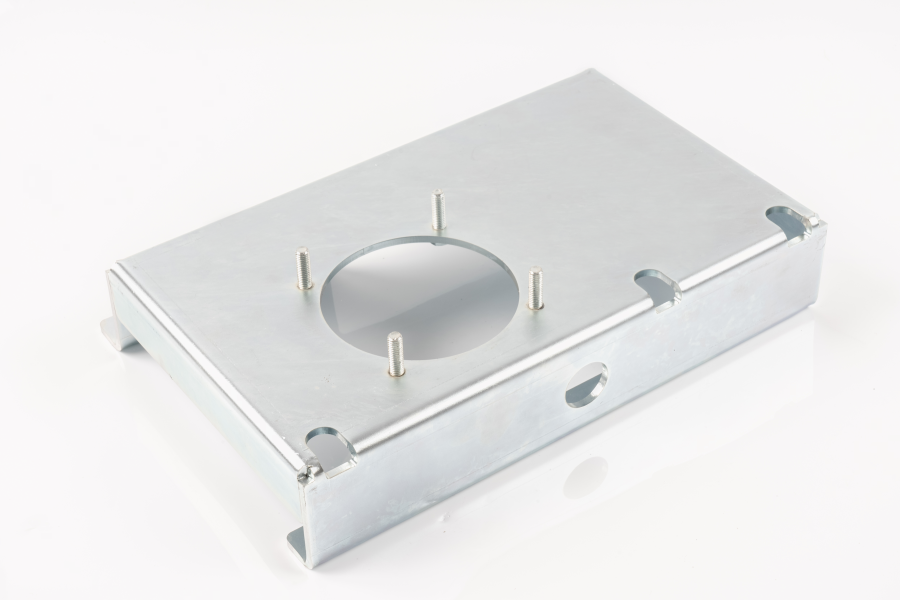

 Company Profile
 +86-189-57809418
 Zouxi Village, Tangxi Town, Yinzhou District, Ningbo City, Zhejiang Province, China
Copyright © Ningbo Mingli Electric Technology Co., Ltd. All rights reserved. Custom Hardware Parts Maunfacturers
