


 Eng
Eng 
 中文简体
中文简体
 Home / News / Industry News / Sheet Metal Working, How to Cut Sheet Metal, Stamping Metal Parts and Sheet Metal Parts: The Complete Practical Guide
 Sheet Metal Working, How to Cut Sheet Metal, Stamping Metal Parts and Sheet Metal Parts: The Complete Practical Guide
 2026.05.07
 Industry News
Everything You Need to Know About Sheet Metal in One Place
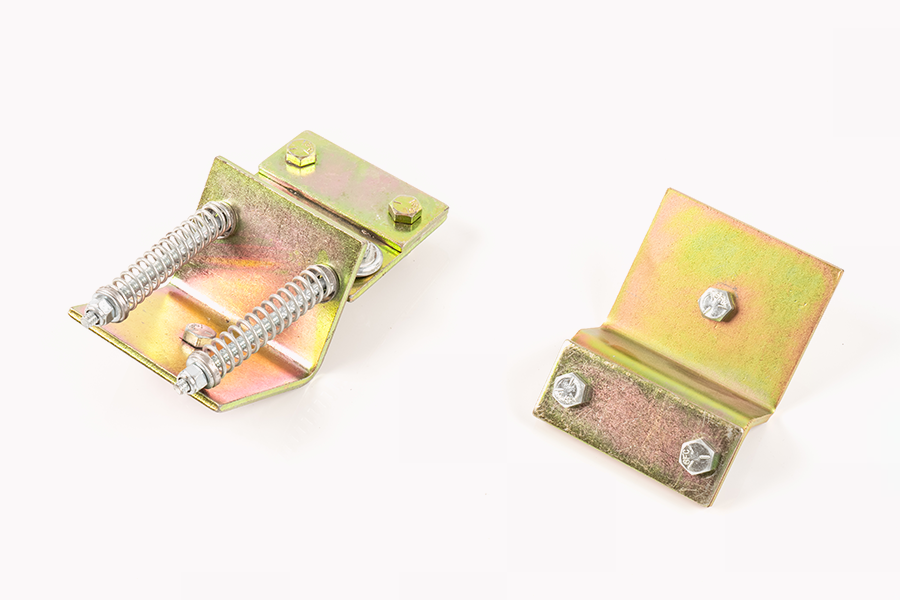
Sheet metal working is the industrial and fabrication discipline of shaping, cutting, forming, and joining flat metal stock (typically 0.5 mm to 6 mm thick) into functional components and structures. It produces the widest variety of manufactured metal parts of any fabrication process, from automotive body panels and HVAC ductwork to electronic enclosures, kitchen equipment, and structural brackets. The two most important production methods within sheet metal working are cutting (which includes shearing, laser cutting, plasma cutting, and punching) and forming (which includes bending, stamping, and deep drawing). Stamping Metal Parts by pressing sheet metal between a die and punch set at high speed is the dominant production method for high-volume Sheet Metal Parts across automotive, appliance, electronics, and consumer goods industries.
If you are asking practical questions such as how to cut sheet metal straight, how to cut holes in metal, or what is a sheet metal screw, this guide provides direct actionable answers based on the actual tools, techniques, and specifications used by professionals. If you are evaluating industrial manufacturing options for Sheet Metal Parts or Stamping Metal Parts, the process selection and cost guidance below gives you the data to make an informed decision.
What Is Sheet Metal Working: Scope, Processes, and Materials
What is sheet metal working as a discipline encompasses every operation performed on flat metal sheet from raw material receipt through finished component delivery. The scope is broader than most people realize: it includes not only cutting and bending but also surface treatment, welding, riveting, thread forming, and assembly of multi-component Sheet Metal Parts into finished subassemblies.
The Core Processes of Sheet Metal Working
- Shearing and cutting: Separating sheet metal along a line using mechanical shear blades, laser energy, plasma arc, water jet, or punching dies. The method chosen depends on material thickness, required edge quality, quantity, and whether the cut is straight or profiled.
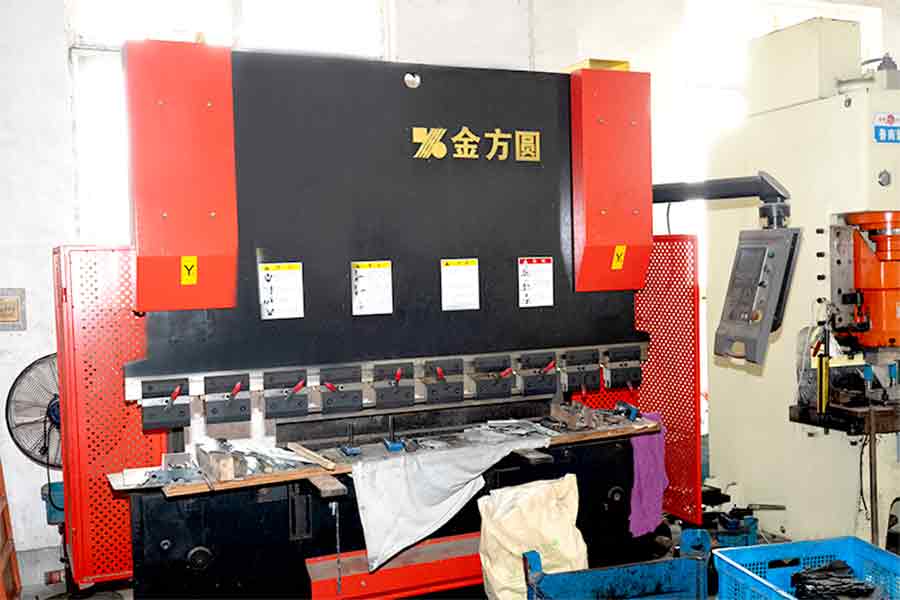
- Bending and forming: Changing the shape of flat sheet by applying force along a line (bending in a press brake) or across a three-dimensional die (deep drawing, roll forming, or spinning). Bending produces angles and channels; deep drawing produces cups, boxes, and complex enclosures.
- Stamping: A high-speed press operation that combines punching, blanking, bending, and forming in a single or multi-stage die sequence. Stamping Metal Parts at production volumes of thousands to millions of pieces per year is the economically dominant production method for complex Sheet Metal Parts wherever tooling cost can be amortized over sufficient volume.
- Joining: Connecting Sheet Metal Parts by welding (MIG, TIG, spot welding), riveting, clinching, screwing, or adhesive bonding. The joining method is often specified alongside the sheet metal working process because it determines the joint strength, appearance, and disassembly capability of the finished assembly.
- Finishing: Surface treatment operations including deburring, grinding, powder coating, wet painting, anodizing (for aluminum), galvanizing, and electroplating that protect the Sheet Metal Parts from corrosion and provide the required appearance.
Common Sheet Metal Materials and Their Characteristics
| Material | Typical Thickness Range | Key Properties | Common Applications |
|---|---|---|---|
| Cold rolled steel (CRS) | 0.5 to 3.0 mm | Smooth surface, good formability, low cost | Enclosures, brackets, appliance panels |
| Hot rolled steel (HRS) | 1.5 to 6.0 mm | Lower cost than CRS, scaled surface, structural grade | Structural frames, heavy duty brackets |
| Galvanized steel | 0.4 to 3.0 mm | Zinc-coated for corrosion resistance | HVAC ducting, roofing, outdoor enclosures |
| Stainless steel (304/316) | 0.5 to 4.0 mm | Excellent corrosion resistance, hygienic surface | Food equipment, medical, marine components |
| Aluminum (5052, 6061) | 0.5 to 5.0 mm | Lightweight, good formability, non-magnetic | Aerospace, electronics, automotive trim |
| Copper and brass | 0.3 to 3.0 mm | Excellent conductivity, decorative, antimicrobial | Electrical components, decorative panels |
How Is Sheet Metal Manufactured: From Raw Iron to Finished Sheet
Understanding how is sheet metal manufactured provides essential context for selecting the right material and thickness for a given application, because the manufacturing route determines the surface condition, dimensional tolerances, and mechanical properties of the sheet before any fabrication begins.
Stage 1: Steelmaking and Initial Casting
Sheet metal production begins at the steel mill where iron ore or scrap steel is melted in a basic oxygen furnace (BOF) or electric arc furnace (EAF) at temperatures above 1,600 degrees Celsius. The molten steel is refined to remove impurities, alloyed with specific elements (carbon, manganese, silicon, chromium for stainless grades), and continuously cast into slabs typically 200 to 250 mm thick, 1,000 to 2,000 mm wide, and up to 12 m long. These slabs are the starting material for all subsequent rolling operations.
Stage 2: Hot Rolling to Coil
The cast slab is reheated to approximately 1,200 degrees Celsius and passed through a series of rolling mill stands (typically 5 to 7 stands in a continuous hot strip mill) that progressively reduce the thickness from 200 mm down to 1.5 mm to 12 mm in a single pass. At exit from the last rolling stand, the hot rolled strip is wound onto a coil on a downcoiler. Hot rolled steel sheet produced this way has a characteristic dark blue-grey oxide scale on the surface (mill scale) and dimensional tolerances of plus or minus 0.1 mm to 0.25 mm on thickness depending on the rolling mill and the applicable standard (ASTM A568 in the US, EN 10029 in Europe).
Stage 3: Cold Rolling for Precision Thickness and Surface Quality
For sheet metal applications requiring tighter thickness tolerances, smoother surfaces, and better formability, the hot rolled coil is further processed by cold rolling. The coil is first pickled in hydrochloric acid to remove the mill scale, then cold rolled through a 4-high or 6-high rolling mill at room temperature to reduce thickness by a further 30% to 75% of the hot rolled gauge. Cold rolling produces a bright, smooth surface and achieves thickness tolerances of plus or minus 0.02 mm to 0.05 mm, which is essential for Stamping Metal Parts in progressive dies where part-to-part dimensional consistency depends on consistent incoming material thickness.
After cold rolling, the work-hardened steel is annealed (heat treated) to restore ductility, then temper-rolled (skin-passed) with a light reduction of 0.5% to 2% to improve surface flatness and provide the correct surface texture for subsequent forming operations. The finished cold rolled coil is then slit to the required width and either supplied as coil or cut to sheet lengths for the customer.
Stage 4: Surface Coating for Corrosion Protection
Galvanized sheet is produced by passing cold rolled steel strip through a bath of molten zinc at approximately 450 degrees Celsius (hot-dip galvanizing), depositing a zinc alloy coating typically 7 to 14 microns thick on each surface. The zinc coating protects the underlying steel by both barrier action (physical separation from the environment) and galvanic protection (zinc preferentially corrodes to protect adjacent exposed steel at cut edges). Galvanized sheet to G90 specification (ASTM A653) carries a minimum total zinc coating weight of 275 g/m² (approximately 19 microns per side), providing corrosion resistance sufficient for outdoor applications in moderate climates without additional surface treatment.
How to Cut Sheet Metal Straight: Tools, Techniques, and Accuracy
Knowing how to cut sheet metal straight is one of the most fundamental skills in sheet metal working, applicable to both professional fabricators and DIY users. The correct tool for a straight cut depends on the thickness of the metal, the length of the cut, and whether the cut must be burr-free on both sides of the kerf.
Manual and Power Cutting Tools for Straight Cuts
- Bench shear (guillotine shear): The most precise and cleanest method for straight cuts in sheet metal up to approximately 6 mm thick. A fixed lower blade and a descending upper blade shear the metal with minimal distortion and no heat affected zone. Professional bench shears cut straight lines to tolerances of plus or minus 0.5 mm over 1,200 mm cut length. The upper blade is set at a rake angle (typically 1 to 3 degrees from horizontal) to reduce the required cutting force and provide a progressive shearing action that minimizes distortion. For production straight cuts in quantities from one sheet to thousands, the bench shear is the correct tool for sheet thickness from 0.5 mm to 4.0 mm in mild steel and equivalent gauges of aluminum.
- Circular saw with metal cutting blade: A practical portable tool for straight cuts in sheet metal up to 3 mm thick when a shear is not available. Use a blade specifically rated for steel or aluminum cutting (typically 60 to 80 tooth carbide-tipped blades for steel, fine-tooth circular saw blades for aluminum). Clamp a steel straightedge guide to the sheet and run the saw base plate against it for a straight cut. The circular saw generates chips and heat, so wear full eye protection and gloves, and keep the cutting area clear of personnel.
- Angle grinder with cutting disc: Effective for straight cuts in mild steel up to 6 mm thick in field conditions where no power shear is available. Use a 1.0 mm to 1.6 mm thick cutting disc for sheet metal (thicker discs waste more material and generate more heat). Mark the cut line with a marker and use a steel straightedge clamped to the sheet as a guide. The angle grinder cut produces a burr on the underside of the cut that must be removed by deburring before the sheet is assembled.
- Jigsaw with metal cutting blade: Better suited to curved cuts but usable for straight cuts in thin sheet (up to 2 mm mild steel, up to 3 mm aluminum) with a fine-tooth bi-metal blade. Requires a straight guide clamped to the sheet. The jigsaw produces a rougher cut edge than a shear and has more tendency to vibrate the sheet during cutting, requiring secure clamping.
- Tin snips (aviation snips): Hand operated shears for thin sheet up to approximately 1.2 mm (18 gauge) mild steel and up to 1.6 mm (16 gauge) aluminum. Straight-cut snips (yellow handle) are designed for long straight cuts. Left-cut (red handle) and right-cut (green handle) snips are designed for curved cuts in the respective direction. Tin snips curl the offcut away from the main sheet, which can distort the cut edge in thin material if the snip width is narrow relative to the cut length.
Achieving Accurate Straight Cuts: Practical Tips
- Mark the cut line clearly with a permanent marker or scribe along a steel straightedge. For aluminum, a scribed line is more visible on the shiny surface than a marker line.
- Clamp the sheet securely to a stable surface before cutting. Unsecured sheet vibrates during cutting, causing chatter marks on the cut edge and potential binding of the blade or disc.
- For power tool cuts, clamp a steel angle or straight bar parallel to and on the cut-side of the marked line at the exact distance from the tool baseplate edge to the blade. This ensures the tool tracks straight without requiring the operator to visually follow the line while controlling the tool.
- Make the cut in a single continuous pass at a consistent feed rate. Stopping and restarting mid-cut changes the heat input and can cause the disc or blade to bind in the kerf.
- Deburr all cut edges before handling or assembly using a file, deburring tool, or bench grinder. Sharp cut edges cause hand injuries and prevent flush mating of Sheet Metal Parts at assembly.
How to Cut Holes in Metal: Methods from Basic to Production
Learning how to cut holes in metal requires choosing the right method for the hole size, shape, and quantity required, and the thickness and hardness of the metal. A single 10 mm hole in 1 mm aluminum sheet requires a completely different approach from cutting 500 identical 50 mm diameter holes in 3 mm steel for a production batch of Stamping Metal Parts.
Drill Bits: The Standard Method for Round Holes up to 25 mm
For round holes up to approximately 25 mm diameter in sheet metal up to 6 mm thick, a standard twist drill bit in a drill press or hand drill is the most direct approach. Key considerations for drilling clean holes in sheet metal:
- Use the correct drill bit type: Standard HSS (high speed steel) twist drills work for mild steel, aluminum, and copper sheet. For stainless steel sheet, use cobalt-content HSS drills (M35 or M42 grade) or carbide-tipped drills to handle the work-hardening that occurs at the cutting edge in austenitic stainless steel.
- Control the feed rate: In sheet metal, the drill breaks through the back surface rapidly after the tip clears the front surface, causing the flutes to grab the sheet and spin it violently if the drill is not firmly clamped. Always clamp thin sheet to a backing board and reduce feed pressure just before breakthrough to prevent this.
- Use cutting fluid: Apply a small amount of cutting oil (sulphurized cutting oil for steel, WD-40 or light machine oil for aluminum) to the drill point. This reduces heat at the cutting edge, extending drill life and improving hole quality. For stainless steel sheet, cutting fluid is mandatory because dry drilling of stainless causes rapid work hardening at the hole edge, which dulls the drill tip within the first millimeter of penetration and often results in drill breakage or a burned hole.
Step Drill Bits: The Most Practical Tool for Sheet Metal Hole Making
Step drill bits (also called unibits or step drills) are conical drill bits with multiple diameter steps machined into the surface, each step larger than the previous by typically 2 mm increments. A single step drill can produce holes from the smallest diameter at the tip up to the largest diameter at the base, covering the full range of sizes needed for most sheet metal electrical knockout, grommet, and fastener holes.
A step drill is the single most useful tool for how to cut holes in metal in sheet up to 3 mm thick because it self-centers, produces clean burr-free holes in thin sheet without breakthrough grab, and requires no pilot hole. The progressive diameter increase also makes step drills self-correcting for hole diameter: if the operator stops drilling at the correct diameter step, the hole is exactly the intended size without any trial and error.
Hole Saws: Large Diameter Round Holes
For round holes from 25 mm to 150 mm diameter in sheet metal up to 4 mm thick, a hole saw (also called a hole cutter) mounted in a drill press or handheld drill is the standard approach. A hole saw consists of a cylindrical saw blade with teeth on the bottom edge, driven by a central arbor with a pilot drill that centers the saw on the marked hole location before the teeth engage the metal. Use bimetal hole saws (HSS teeth on a flexible steel body) for most sheet metal applications. Carbide-tipped hole saws are available for harder materials including stainless steel and hardened sheet.
Knockout Punches: Clean Holes in Enclosure Sheet Metal
A knockout punch set consists of a hardened steel punch and a matching die, drawn together by a threaded bolt to shear a clean hole through thin sheet metal in a single action. Knockout punches are the standard tool for cutting precise round, square, and shaped holes in electrical enclosures, control panels, and junction boxes because they produce a clean, burr-free hole with no heat and no distortion of the surrounding sheet. A standard hydraulic knockout punch set can cut holes from 14 mm to 150 mm in diameter through sheet metal up to 3 mm thick with approximately 20 to 100 kN of hydraulic force depending on hole size and material.
Laser Cutting and Plasma Cutting: Production Hole Making
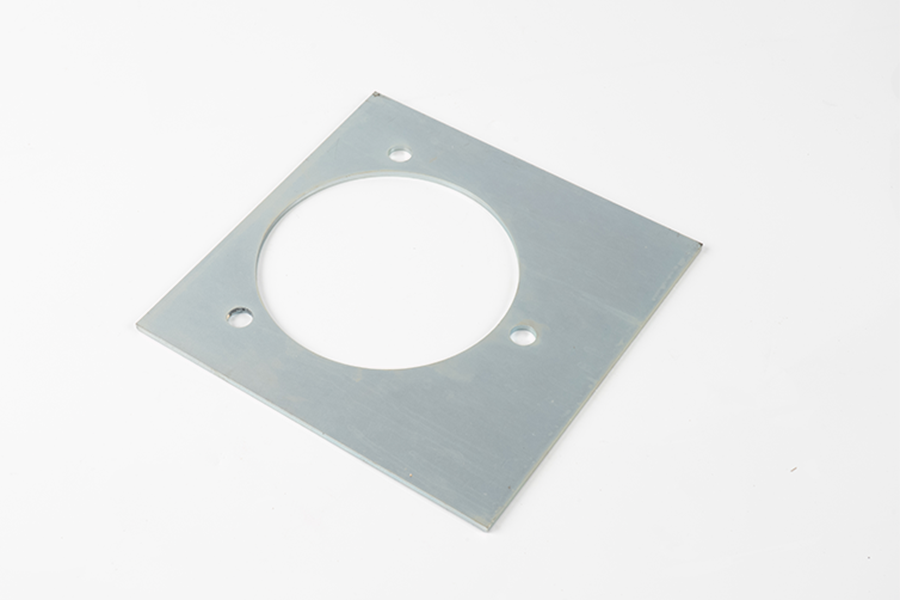
For production quantities of Sheet Metal Parts requiring precise holes of any shape, laser cutting and plasma cutting are the industrial standard processes. A fiber laser cutting machine can cut holes as small as equal to the material thickness (so a 1.5 mm hole in 1.5 mm steel sheet) with positional accuracy of plus or minus 0.05 mm and edge quality requiring no secondary deburring in most cases. Plasma cutting is faster and lower cost per meter of cut than laser but produces a heat-affected zone and a slightly tapered kerf that limits its use for precision holes below approximately 10 mm diameter in sheet under 3 mm thickness.
What Is a Sheet Metal Screw: Design, Function, and Selection
Understanding what is a sheet metal screw requires distinguishing it clearly from the wood screws and machine screws it resembles superficially. A sheet metal screw is a self-tapping fastener specifically designed to create its own threads in sheet metal as it is driven, without requiring a pre-tapped hole. The thread geometry, tip design, and hardness of a sheet metal screw are all optimized for metal-to-metal fastening in thin gauge sheet.
How Sheet Metal Screws Work
When a sheet metal screw is driven into a pre-drilled pilot hole in sheet metal, the sharp threads on the screw shank displace and cut the sheet metal material outward to form mating threads in the hole wall. The pilot hole diameter is deliberately smaller than the screw's major (outer) thread diameter, typically by 0.1 mm to 0.4 mm depending on the screw size and the sheet thickness, so that the threads have sufficient material to cut into. A correctly specified sheet metal screw in the correct pilot hole produces a thread engagement length equal to the full sheet thickness, providing pull-out resistance of 500 to 2,000 N depending on screw size, sheet thickness, and material.
Types of Sheet Metal Screws by Point Design
- Type A (sharp point, coarse thread): The original sheet metal screw design with a gimlet-style tapered point and widely spaced threads. Suitable for thin sheet (under 1.5 mm) where the point can pierce without a pilot hole in some materials. Less commonly specified in modern practice because Type AB provides better performance.
- Type AB (sharp point, fine thread): A refined version of Type A with a sharper point and finer thread pitch, providing better thread holding in thinner materials. The most widely used sheet metal screw type in general fabrication.
- Type B (blunt point): Has a blunt tip designed for use in pre-drilled holes rather than self-piercing. Provides more thread engagement in the tapped hole because the full thread profile starts immediately at the tip rather than tapering from a point. Used in heavier gauge sheet where the screw is not expected to start its own hole.
- Self-drilling screws (TEK screws): Have a drill-bit style tip that drills its own pilot hole before the thread section engages. Eliminate the separate drilling step in many sheet metal assembly operations. Available in drill point capacities rated for penetrating specific steel thicknesses: Drill Point 1 (up to 1.6 mm), Drill Point 2 (up to 2.4 mm), Drill Point 3 (up to 4.8 mm), Drill Point 5 (up to 12.7 mm).
Correct Pilot Hole Sizes for Sheet Metal Screws
| Screw Size | Major Diameter (mm) | Pilot Hole in Steel (mm) | Pilot Hole in Aluminum (mm) |
|---|---|---|---|
| No. 6 | 3.5 | 2.8 | 3.0 |
| No. 8 | 4.2 | 3.5 | 3.6 |
| No. 10 | 4.8 | 4.0 | 4.2 |
| No. 12 | 5.5 | 4.6 | 4.8 |
| No. 14 | 6.3 | 5.2 | 5.5 |
Stamping Metal Parts: How High-Volume Sheet Metal Parts Are Produced
Stamping Metal Parts is the most economically important and highest-volume production process within sheet metal working. Understanding how stamping works, what it produces, and when it is the right choice for a given component enables engineers and procurement professionals to make correct make-or-buy decisions for Sheet Metal Parts across all industries.
How Metal Stamping Works
Metal stamping uses a hydraulic or mechanical press to force a punch through or into sheet metal held against a die. The die set defines the geometry of the finished part: the punch and die are mirror-image shapes separated by a small clearance (typically 5% to 15% of material thickness) that determines the quality of the sheared edge or the accuracy of the formed shape. Stamping Metal Parts operations include:
- Blanking: Punching out a flat blank of a specific outline shape from a sheet or strip. The blank is the starting shape for subsequent forming operations. In progressive die stamping, blanking and all subsequent forming operations occur in a single multi-station die that processes a continuous coil strip through each station with each press stroke.
- Piercing (punching): Cutting holes through the sheet within the part outline. Occurs simultaneously with or after blanking in a progressive die. Precision punching in a stamping press produces holes to plus or minus 0.05 mm positional accuracy at production rates of 20 to 400 strokes per minute.
- Bending in the die: Forming angles, channels, and flanges in the blank as it progresses through the die stations. Die bending in a progressive stamping die is more accurate and faster than press brake bending of individual blanks, making it the preferred method for high-volume Sheet Metal Parts with multiple bends.
- Deep drawing: Pulling a flat blank into a cup or box shape by pressing it into a die cavity with a punch. Produces the enclosures, cups, housings, and pan shapes used across automotive, appliance, and consumer products. A successfully deep drawn part can have a depth-to-diameter ratio of 0.5 to 1.0 in a single draw, requiring careful material selection (high elongation alloys), lubrication, and blank holder force control to prevent tearing in the corner radii or wrinkling in the flange area.
When Stamping Metal Parts Is the Right Choice
The economics of Stamping Metal Parts are driven by tooling cost amortization. A simple single-station blanking die for a small bracket costs USD 2,000 to USD 8,000. A complex progressive die for a multi-feature automotive Sheet Metal Part costs USD 50,000 to USD 500,000 or more. These tooling costs are fixed regardless of production volume, so:
- Below 500 pieces: Stamping is rarely economic. Laser cutting and press brake bending are more cost-effective because no tooling investment is required.
- 500 to 5,000 pieces: Simple stamping dies (blanking, simple pierce and bend) may be economic for straightforward geometry. Complex progressive dies are not yet justified at this volume.
- Above 5,000 pieces: Stamping becomes progressively more competitive as volume increases and the per-piece tooling amortization falls. At 50,000 pieces and above, Stamping Metal Parts almost always delivers the lowest per-piece cost for components within the geometric capability of stamping processes.
- Above 500,000 pieces per year: Progressive die stamping with coil-fed automatic presses at 100 to 400 strokes per minute is the only economically viable production method for flat and formed Sheet Metal Parts at this scale. Automotive body components, connector housings, appliance parts, and consumer electronics chassis are all produced this way.
Quality and Tolerance Capabilities of Stamped Sheet Metal Parts
Stamping Metal Parts in a well-maintained progressive die achieves the following typical tolerances for production Sheet Metal Parts:
- Hole diameter: plus or minus 0.05 mm to 0.10 mm
- Hole position relative to datum: plus or minus 0.10 mm to 0.20 mm
- Blank outline dimension: plus or minus 0.10 mm to 0.20 mm
- Bend angle: plus or minus 0.5 to 1.0 degree
- Formed height or depth: plus or minus 0.10 mm to 0.30 mm
These tolerances are tighter than what is achievable with manual press brake bending (typically plus or minus 0.5 mm on formed dimensions and plus or minus 1 degree on angles), which is one reason Stamping Metal Parts in precision dies is specified for components where assembly fit-up between multiple Sheet Metal Parts is critical to product function.
Sheet Metal Parts in Industry: Applications and Design Guidelines
Sheet Metal Parts are among the most ubiquitous manufactured components in the modern economy. They form the structure, enclosures, brackets, and connecting elements in virtually every product category from consumer electronics to heavy industrial machinery. Understanding which industries rely most heavily on Sheet Metal Parts and what design principles make those parts manufacturable and cost-effective is essential knowledge for any engineer or buyer working in industrial manufacturing.
Key Industries and Their Sheet Metal Parts Requirements
- Automotive: Body panels, floor pans, doors, hoods, structural pillars, seat frames, brackets, and heat shields. The automotive industry is the single largest consumer of Stamping Metal Parts globally, processing over 100 million tonnes of steel and aluminum sheet annually. Automotive Sheet Metal Parts must meet tight dimensional tolerances for body-in-white assembly, high surface quality for painted visible surfaces, and specified crash energy absorption properties for structural components.
- Electronics and electrical equipment: Chassis, enclosures, shields, brackets, heat sinks, connector housings, and busbar components. Electronics Sheet Metal Parts typically use thin aluminum (0.5 to 2.0 mm) or cold rolled steel (0.5 to 1.5 mm) and require precision punched holes for connector and component mounting with positional tolerances of plus or minus 0.1 mm or tighter.
- HVAC and building services: Ductwork, plenums, dampers, diffuser housings, and equipment enclosures. Galvanized steel Sheet Metal Parts dominate HVAC applications because of the corrosion resistance required in humid air streams, with standard gauges of 0.55 mm to 1.5 mm for duct sections and up to 3.0 mm for equipment housings.
- Medical equipment: Imaging equipment frames, surgical instrument trays, hospital furniture, and equipment enclosures. Medical Sheet Metal Parts require stainless steel (304 or 316 grade) with Ra below 0.8 microns surface finish for any surface that contacts patients or instruments, and must comply with ISO 13485 quality system requirements.
- Aerospace: Fuselage skins, wing ribs, engine nacelle panels, interior monument structures, and brackets. Aerospace Sheet Metal Parts use primarily aluminum alloys (2024, 7075, 6061) and titanium, produced to the tightest tolerances in the industry (plus or minus 0.05 mm on critical fit surfaces) under AS9100-certified quality management systems.
Design Guidelines for Cost-Effective Sheet Metal Parts
- Maintain minimum bend radius: The minimum inside bend radius for a given material is approximately equal to 0.5 to 1.0 times the material thickness for mild steel and 1.0 to 2.0 times thickness for stainless steel and aluminum. Specifying smaller bend radii than the material's minimum causes cracking at the bend, requiring a more expensive material grade with higher elongation or a process change to achieve the geometry.
- Keep hole-to-edge distance above minimum: For punched holes in Sheet Metal Parts, the minimum distance from the hole center to any edge or adjacent hole should be at least 1.5 times the hole diameter. Closer spacing causes the punch to distort the material between the hole and the edge during punching, creating a burr or material pullout that weakens the part.
- Avoid tight tolerances on formed dimensions unless functionally required: Every tightened tolerance on a Sheet Metal Part increases the cost of inspection, increases the rejection rate during production, and may require additional forming operations or secondary machining. Specify tolerances based on the actual assembly fit-up and functional requirements of the part, not on general "tight is better" thinking.
- Standardize material thickness across all Sheet Metal Parts in an assembly: Using the same material thickness for all parts in a welded or screwed assembly simplifies purchasing, reduces inventory carrying cost, and enables shared tooling for blanking and forming operations across multiple parts. Where different thicknesses are required, limit the number of gauges used in a single assembly to the minimum necessary to meet the structural requirements.
Frequently Asked Questions
1. What is sheet metal working and how is it different from other metal fabrication processes?
Sheet metal working is the discipline of fabricating components from flat metal sheet stock typically 0.5 mm to 6 mm thick using cutting, forming, joining, and finishing operations. It differs from other metal fabrication processes such as machining (which removes material from solid stock to create three-dimensional shapes), casting (which pours molten metal into a mold), and forging (which uses compressive force on heated metal billets). Sheet metal working starts with flat stock and changes its shape without removing significant material, making it inherently more material-efficient than machining. The defining advantage of sheet metal working is its ability to produce lightweight, strong, complex-geometry parts at high production rates and competitive cost through processes including Stamping Metal Parts, laser cutting, and press brake bending.
2. How is sheet metal manufactured and what determines its thickness tolerance?
Sheet metal is manufactured by hot rolling steel slabs at 1,200 degrees Celsius down to coil thickness, followed by cold rolling at room temperature for precise gauge control and surface quality improvement. Thickness tolerance is determined by the rolling mill equipment, the target thickness, and the applicable standard (ASTM A568 for hot rolled, ASTM A568 and EN 10131 for cold rolled). Cold rolled sheet achieves tolerances of plus or minus 0.02 mm to 0.05 mm on thickness, while hot rolled sheet is specified at plus or minus 0.1 mm to 0.25 mm. For Stamping Metal Parts applications requiring consistent material flow in forming dies, cold rolled sheet with tight thickness tolerances is always preferred because material thickness variation directly causes part dimension variation in deep drawing and bending operations.
3. What is a sheet metal screw and how is it different from a wood screw or machine screw?
A sheet metal screw is a self-tapping fastener with hardened threads designed to cut into sheet metal as it is driven through a pre-drilled pilot hole, creating its own mating threads without requiring a tapped hole or nut. A wood screw has coarser, more widely spaced threads and a tapered body designed to compress wood fibers and grip by friction. A machine screw has precision threads designed to mate with a pre-tapped hole or nut at a specified pitch and does not form threads in the substrate. The key practical distinction is that a sheet metal screw requires only a drilled clearance hole in the top sheet and a slightly undersized pilot hole in the bottom sheet, while a machine screw requires a tapped thread in the bottom sheet or a nut on the back face.
4. How to cut sheet metal straight without expensive equipment?
For how to cut sheet metal straight without a bench shear, the most effective approach is to clamp a steel straightedge or angle bar firmly to the sheet at the cut line offset distance, then run a circular saw with a metal-rated carbide blade against the guide. For sheet under 1.5 mm thickness, straight-cut aviation snips (yellow handle) guided along a marked line produce an acceptably straight cut with no power tools required. For precise straight cuts in thin aluminum (under 2 mm), a sharp utility knife scored 3 to 5 times along a straightedge can allow the sheet to be snapped cleanly along the score line, similar to scoring and snapping glass.
5. How to cut holes in metal for electrical conduit entry into an enclosure?
For cutting conduit entry holes in a sheet metal enclosure, a knockout punch set is the professional standard tool because it produces a clean, burr-free hole at the precise diameter required for the conduit fitting without distorting the enclosure panel. For a single hole or where a knockout set is not available, a step drill bit can produce clean holes up to 30 mm diameter in sheet up to 3 mm thick. For large conduit holes above 50 mm diameter, a hole saw of the correct size produces the required opening. Always deburr the hole edge after cutting, regardless of the method used, to protect conduit wiring insulation from abrasion at the entry point and to prevent injury during installation.
6. What is the difference between Stamping Metal Parts and laser cut Sheet Metal Parts?
Stamping Metal Parts uses a hardened die and punch to simultaneously form the complete geometry of a part in a single or multi-stage pressing operation at very high speed (20 to 400 parts per minute), with tooling costs of USD 2,000 to USD 500,000 depending on complexity. Laser cut Sheet Metal Parts are produced by a CNC laser cutting machine that cuts the part outline and internal features from flat sheet using a focused laser beam, requiring no dedicated tooling (the part program is written in software) but producing parts at slower speeds (1 to 20 parts per minute for complex profiles). Laser cutting is economically superior for low to medium volumes (under 5,000 pieces) and for complex profiles that would require expensive progressive tooling. Stamping is economically superior above 5,000 pieces per year where the tooling cost amortizes to a fraction of a cent per piece.
7. What pilot hole size should I use for a No. 10 sheet metal screw in 1.5 mm mild steel?
For a No. 10 sheet metal screw (major diameter 4.8 mm) in 1.5 mm mild steel, the recommended pilot hole diameter is 4.0 mm. This undersize provides enough material for the screw threads to cut a secure mating thread in the pilot hole wall without requiring excessive driving torque that could strip the thread or cam out the drive recess. If the pilot hole is too large (above 4.3 mm for a No. 10 screw in steel), the thread engagement will be insufficient and the screw will pull out at lower-than-rated force. If the pilot hole is too small (below 3.7 mm), the driving torque will be excessive and the screw head drive recess may strip before the screw is fully seated.
8. Can Stamping Metal Parts produce threads or only flat and formed shapes?
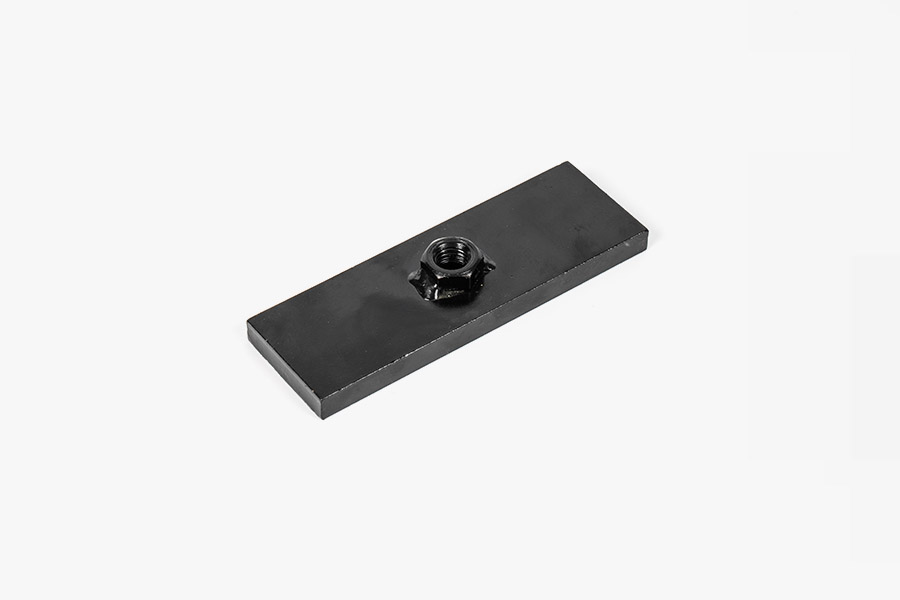
Stamping Metal Parts can produce threaded features through in-die thread forming operations. Extruded holes (also called extruded flanges or burring) are produced in the stamping die by a piercing punch followed by a flanging punch that draws a collar of material upward around the pierced hole, increasing the material thickness at the hole perimeter from one sheet thickness to 2 to 3 times the sheet thickness. This collar is then threaded by a roll-forming tap to produce a load-bearing internal thread in a sheet metal part without the need for a separate nut or weld nut. An extruded and tapped hole in 1.5 mm cold rolled steel sheet using an M5 thread provides thread engagement of 3 to 4 mm, sufficient for standard machine screw loading in light to medium duty assemblies.
9. What surface finish options are available for Sheet Metal Parts after fabrication?
Sheet Metal Parts can be finished by a wide range of surface treatment processes depending on the required corrosion resistance, appearance, and functional properties. Common finishing options include: powder coating (electrostatic application of thermosetting polymer powder, providing 60 to 120 microns of protective and decorative coating in any color); wet painting (lower capital cost than powder coating but typically thinner film and lower durability); hot-dip galvanizing (for steel Sheet Metal Parts requiring long outdoor service life without maintenance); anodizing (for aluminum Sheet Metal Parts, producing a hard, wear-resistant oxide layer that can be clear or dyed); electroplating (zinc, nickel, or chrome plating for specific corrosion protection or conductivity requirements); and electropolishing (for stainless steel Sheet Metal Parts requiring maximum surface smoothness for hygienic or optical applications).
10. How do I specify the correct gauge for my Sheet Metal Parts design?
Selecting the correct gauge (thickness) for Sheet Metal Parts requires balancing structural stiffness, load capacity, weight, and cost. As a starting point: for light-duty enclosures and covers with no structural load requirement, 0.8 mm to 1.2 mm cold rolled steel is standard. For structural brackets and frames carrying moderate loads, 1.5 mm to 2.5 mm is typical. For heavy structural applications in mild steel, 3.0 mm to 6.0 mm is appropriate. For aluminum Sheet Metal Parts, increase the gauge by approximately 40% to 50% compared to the equivalent steel gauge to achieve similar stiffness, because aluminum's elastic modulus (70 GPa) is approximately one-third that of steel (200 GPa), meaning a thicker aluminum section is needed to achieve the same deflection under load. Always verify the gauge selection by calculating the deflection or stress in the critical load case using standard beam or plate formulas before releasing the design for production.

 Company Profile
 +86-189-57809418
 Zouxi Village, Tangxi Town, Yinzhou District, Ningbo City, Zhejiang Province, China
Copyright © Ningbo Mingli Electric Technology Co., Ltd. All rights reserved. Custom Hardware Parts Maunfacturers
