


 Eng
Eng 
 中文简体
中文简体
 Home / News / Industry News / Stamping Metal Parts: Why Are They the Backbone of Modern Manufacturing Across Industries?
 Stamping Metal Parts: Why Are They the Backbone of Modern Manufacturing Across Industries?
 2026.04.02
 Industry News
Metal stamping is a cold-forming process that uses a press and a set of tool and die components to shape flat metal stock into predetermined forms. The process can include a variety of operations, including blanking (cutting the initial shape from the metal sheet), piercing (creating holes or openings), bending (forming angles and curves), drawing (creating deep, cup-like shapes), embossing (raising or recessing designs), coining (squeezing metal to precise thickness), and many others. A single progressive die may perform dozens of these operations in sequence as the metal strip advances through the press, producing a finished part every second or even faster. The tooling used in stamping is typically made from high-grade tool steel or carbide and is precision-machined to tolerances measured in thousandths of an inch or even microns. Once the tooling is created, the marginal cost of producing additional parts is very low, making stamping ideal for high-volume production runs. However, advances in stamping technology have also made it economical for medium-volume runs, particularly when using modular tooling or flexible manufacturing systems.
The history of metal stamping dates back to the Industrial Revolution, but the technology has advanced dramatically in recent decades. Modern stamping presses are computer-controlled marvels capable of producing hundreds of parts per minute with consistent quality. Servo-drive presses, which use electric motors rather than mechanical flywheels, offer unprecedented control over ram speed and position, enabling complex forming operations that were previously impossible. High-speed transfer presses can move parts from station to station without a carrier strip, reducing material waste and improving efficiency. Progressive dies with built-in sensors can monitor the stamping process in real-time, detecting variations in material thickness, tool wear, or press alignment before defects occur. These technological advances have expanded the range of parts that can be stamped, improved quality and consistency, and reduced the cost per part. The following sections explore in depth why stamped metal parts have become indispensable across manufacturing sectors and what distinguishes high-quality stamping operations from their competitors.
Why Stamping Outperforms Alternative Metal Forming Processes
Unmatched Production Speed and Cost Efficiency for High Volumes
The most compelling advantage of metal stamping is its exceptional production speed and cost efficiency, particularly for high-volume applications. A modern high-speed stamping press can produce 400 to 1,200 parts per minute, depending on the complexity of the part and the press specifications. At these speeds, a single press can produce millions of parts per month. The economics of stamping are straightforward: the fixed costs, including die design, die fabrication, press setup, and initial material procurement, are substantial. However, once these fixed costs are amortized, the variable cost per part is very low, consisting primarily of the raw material cost and the electricity to run the press. For production runs of 50,000 parts or more, stamping is almost always the lowest-cost manufacturing method. For runs of 1 million parts or more, stamping is dramatically cheaper than alternative processes such as CNC machining, investment casting, or metal injection molding. This cost advantage has made stamping the default choice for industries that produce high volumes of metal components, including automotive (millions of brackets, clips, and structural parts annually), electronics (billions of connectors, contacts, and shields), and appliance manufacturing. Even for lower-volume applications, advances in quick-change tooling and flexible press controls have reduced setup times from hours to minutes, making stamping economical for batches as small as 1,000-5,000 parts.
Exceptional Precision and Consistency Across Millions of Parts
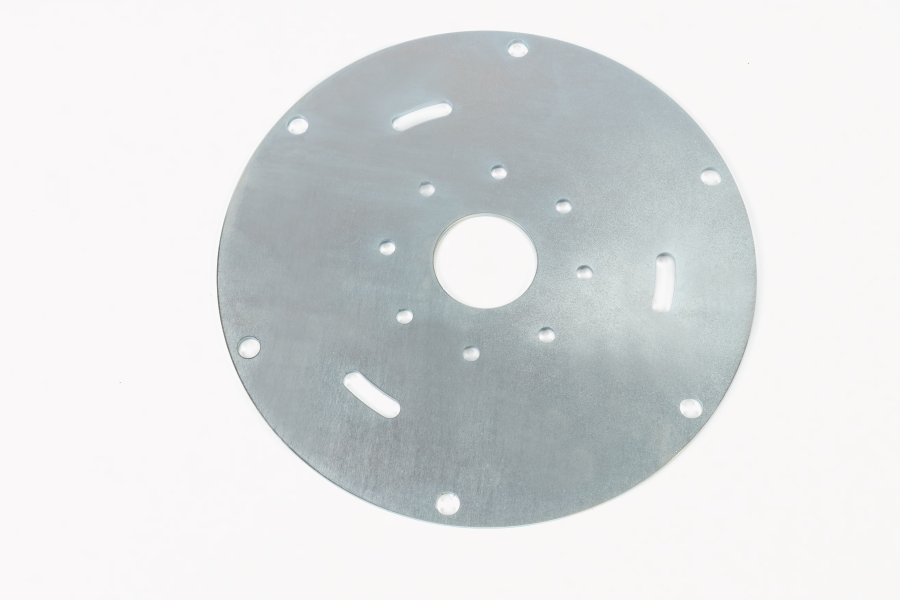
Stamping Metal Parts with remarkable dimensional accuracy and consistency. A well-designed and maintained stamping die can hold tolerances of ±0.001 inches (±0.025 mm) or even tighter for critical features. This level of precision is achieved through the rigidity of the press and die, the accuracy of the die components, and the control of the stamping process parameters. Unlike machining, where each part is cut individually and tool wear can cause gradual dimensional drift, stamping produces each part from the same die cavity. Every part is essentially identical to every other part, provided that the material thickness and properties remain consistent. For industries such as automotive and aerospace, where parts must fit together precisely and assemblies must be repeatable, this consistency is invaluable. A stamped bracket for a vehicle's dashboard must fit exactly into its mounting location on every car coming down the assembly line. A stamped electrical contact must have precisely the right geometry to make reliable connection every time. Stamping delivers this consistency. Furthermore, modern stamping presses can be equipped with in-process inspection systems, including vision cameras, laser sensors, and contact probes, that measure critical dimensions on every part or on a sampling basis. These systems can automatically reject non-conforming parts and can provide real-time feedback to the press controls, adjusting parameters to maintain quality. For manufacturers implementing Six Sigma or other quality management systems, the inherent consistency of stamping is a major advantage.
Extraordinary Material Versatility and Utilization
Metal stamping can process a remarkably wide range of materials, making it adaptable to diverse applications and industries. Common stamping materials include carbon steel (the most common, used for structural parts, brackets, and clips), stainless steel (for corrosion-resistant applications such as medical devices, food equipment, and automotive exhaust components), aluminum (for lightweight applications such as electronics housings and aerospace parts), copper and brass (for electrical components and decorative parts), and exotic alloys such as Inconel, Monel, and titanium (for aerospace, chemical processing, and medical implants). Within each material category, stamping can accommodate a range of thicknesses, from thin foils as thin as 0.001 inches (0.025 mm) for electronics applications to heavy plates up to 0.5 inches (12.7 mm) or thicker for structural components. The ability to use the same stamping process for such a wide range of materials allows manufacturers to standardize on stamping across multiple product lines, simplifying equipment and skill requirements. In addition to material versatility, stamping offers excellent material utilization. Progressive dies are designed to nest parts closely together on the metal strip, minimizing the scrap between parts. For simple parts, material utilization of 70-80% is typical; for highly optimized nesting arrangements, utilization can exceed 90%. The scrap that is generated is generally clean, single-grade metal that can be sold to recyclers, recovering some of the material cost. In contrast, CNC machining from solid stock often generates 50-80% scrap in the form of chips, representing a substantial loss of material value. For expensive materials such as stainless steel or titanium, the material savings from stamping can be enormous.
Design Flexibility and Secondary Operation Integration
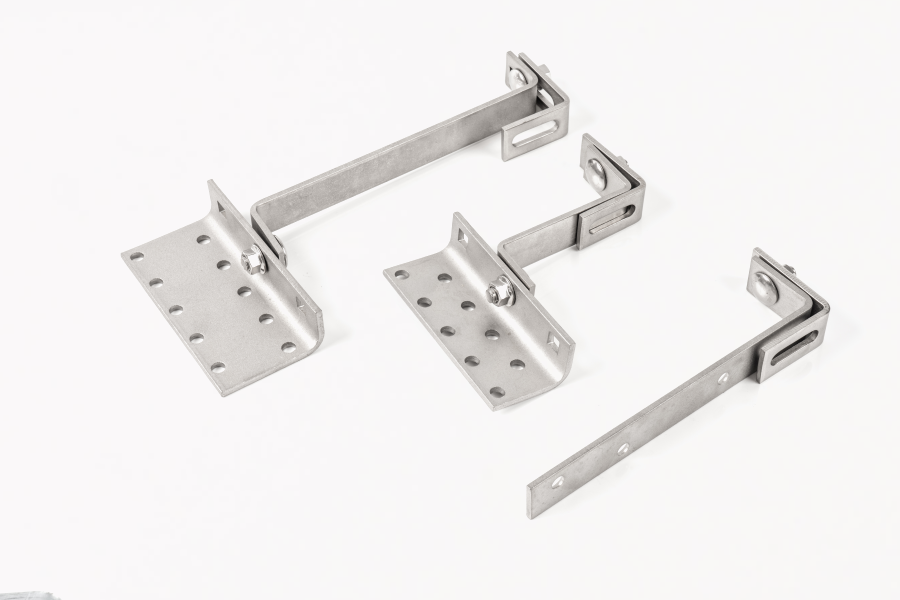
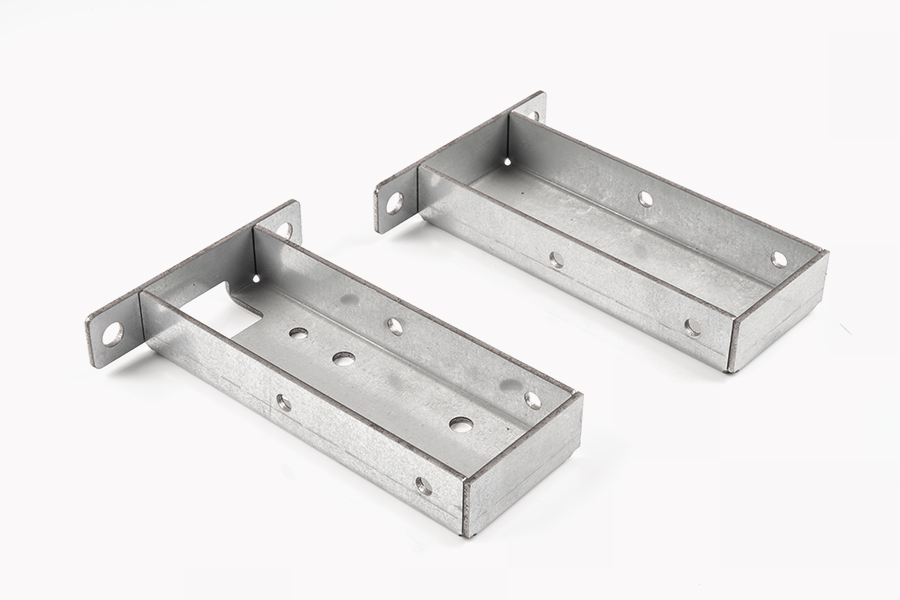
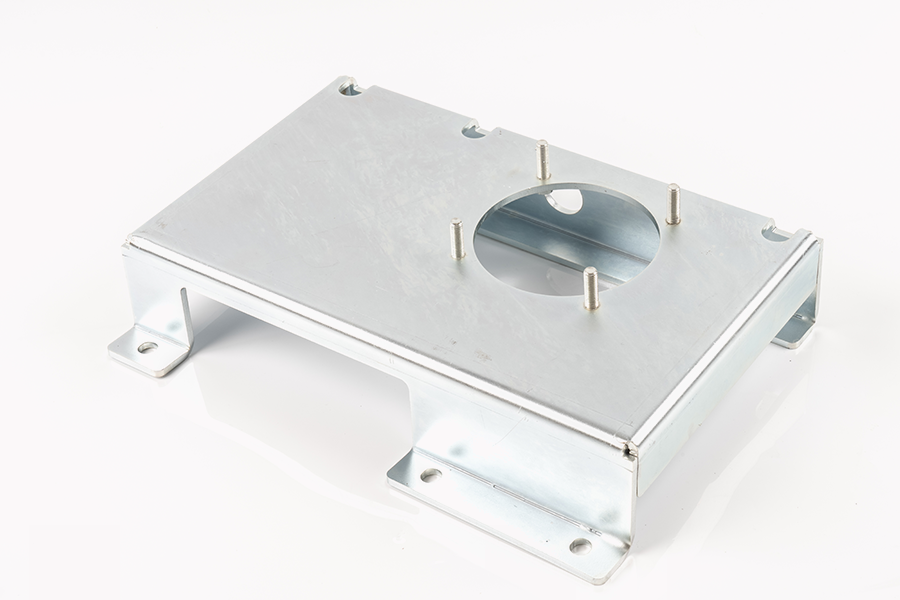
Modern stamping is not limited to simple flat shapes. Progressive and transfer dies can produce highly complex, three-dimensional parts with multiple bends, forms, and features. A single stamping can replace an assembly of multiple parts, reducing manufacturing costs, simplifying inventory, and improving product reliability. For example, a stamped bracket might include integral mounting tabs, locating features, reinforcement ribs, and spring elements, all formed from a single piece of metal. In a traditional assembly, these features might require separate parts welded or riveted together, each with its own cost and quality risk. Stamping also integrates well with secondary operations. Many stamping lines include in-die tapping (cutting threads), in-die riveting or welding (attaching nuts, studs, or other components), and even in-die assembly (joining multiple stamped parts together). Parts can also be stamped, cleaned, and transferred directly to plating, painting, or other finishing operations without intermediate handling. For manufacturers seeking to reduce touch labor and streamline production, stamping offers a path to highly automated, integrated manufacturing cells. The design flexibility of stamping has been further enhanced by advances in simulation software. Engineers can now model the stamping process virtually, using finite element analysis to predict how the metal will flow, where it will thin or wrinkle, and what stresses will remain in the finished part. This virtual tryout capability allows tooling to be designed right the first time, reducing the need for expensive and time-consuming physical trials. Parts that would have been impossible to stamp a decade ago are now routine.
Choosing the Right Stamping Partner for Your Needs
Evaluating Tooling Capabilities and Die Design Expertise
The quality of stamped metal parts is determined almost entirely by the quality of the tooling (dies) used to produce them. Tooling design and fabrication is a specialized engineering discipline that requires deep knowledge of metal behavior, press dynamics, and precision machining. When evaluating potential stamping partners, procurement professionals should look closely at their tooling capabilities. Does the company design and build its own tooling in-house, or does it outsource tooling to third-party shops? In-house tooling capability generally indicates a higher level of technical expertise and provides better control over quality and lead times. Does the company use computer-aided design (CAD) and simulation software for tooling design? Simulation allows potential forming issues to be identified and corrected before steel is cut, reducing tooling iterations and cost. Does the company have a toolroom with advanced machining equipment, such as CNC milling machines, wire EDM (electrical discharge machining), and surface grinders? The precision of the tooling directly affects the precision of the stamped parts. Does the company have a system for tooling maintenance and repair? Stamping dies wear over time and require periodic sharpening, polishing, and component replacement. A stamping partner with a well-organized tool maintenance program will produce more consistent parts over the life of the tooling. Finally, what is the company's experience with parts similar to yours? Tooling design is not one-size-fits-all. A stamping partner who has successfully produced parts in your material, thickness range, and complexity is more likely to deliver quality results on your project.
Understanding Press Capabilities and Production Capacity
Different stamping applications require different press characteristics. The press must have sufficient tonnage to form the material without overloading. It must have adequate bed size to accommodate the die and the part. It must have the appropriate speed for the production volume and the material characteristics. It must have the required features, such as programmable ram motion, part ejection systems, and automation interfaces. When evaluating stamping partners, request a detailed list of their press equipment, including tonnage, bed size, stroke length, speed range, and special features. For high-volume applications, high-speed presses with progressive dies are typically the best choice. For large parts, such as automotive body panels, large-bed hydraulic or transfer presses are required. For prototypes or low-volume production, manually fed presses with simple tooling may be adequate and more economical. Beyond individual press capabilities, consider the stamping partner's overall production capacity. Do they have backup presses in case of breakdown? Do they operate multiple shifts to meet tight deadlines? Do they have excess capacity to accommodate your future growth? A stamping partner that is running at 95% capacity may struggle to meet your delivery requirements or may charge premium prices for expedited orders. A partner with 60-80% capacity utilization is generally more flexible and responsive. Also consider the partner's geographic location relative to your assembly plant. Stamped parts are bulky and heavy, so shipping costs can be significant. A stamping partner located near your facility can reduce freight costs and lead times.
Quality Systems, Certifications, and Traceability Requirements
For many industries, quality certifications are not optional but mandatory. Automotive manufacturers typically require their stamping suppliers to be certified to IATF 16949, the automotive quality management standard. Aerospace companies require AS9100 certification. Medical device manufacturers require ISO 13485 certification. Even if your industry does not require a specific certification, working with a certified stamping partner provides assurance that they have robust quality systems in place. Beyond certifications, inquire about the partner's quality control practices. Do they perform first-article inspection on every new part or tooling change? Do they use statistical process control (SPC) to monitor production and detect trends before defects occur? Do they maintain calibration records for all inspection equipment? Do they have a documented system for handling non-conforming parts, including root cause analysis and corrective action? For critical applications, traceability may be required. Can the stamping partner trace each batch of parts back to the specific coil of material used? Can they identify which press and which die cavity produced each part? Can they provide certificates of conformance and material test reports? A stamping partner with comprehensive quality systems will produce more consistent parts and will be more responsive when issues arise. They will also be better prepared to support you during customer audits or regulatory inspections.
Applications Across Industries
Automotive Industry: The Largest Consumer of Stampings
The automotive industry is by far the largest consumer of stamped metal parts. A typical passenger vehicle contains thousands of stamped components, ranging from small brackets and clips to large structural parts such as body panels, chassis frames, and door assemblies. Stamping is used for underbody components, engine cradles, suspension arms, seat frames, dashboard supports, and countless other parts. The automotive industry values stamping for its combination of high volume, low cost, and consistent quality. Modern automotive stamping plants use large transfer presses that can produce entire body sides or floor pans in a single stroke. High-speed progressive presses produce smaller components at rates of 500-1,000 parts per minute. The trend toward lightweighting, driven by fuel economy and emissions regulations, has increased the use of advanced high-strength steels and aluminum in automotive stampings, presenting new challenges for die design and press selection. Stamping partners serving the automotive industry must be certified to IATF 16949 and must be prepared to support just-in-time delivery schedules and rigorous quality requirements.
Electronics and Electrical Industry: Precision in Small Packages
The electronics industry demands stamped parts that are tiny, precise, and produced in astronomical volumes. Electrical contacts, connectors, shielding cans, lead frames, battery terminals, and heat sinks are all produced by high-speed stamping. A single smartphone may contain dozens of stamped components. A laptop may contain hundreds. A data center server may contain thousands. These parts are typically made from copper alloys, phosphor bronze, or beryllium copper for their electrical conductivity and spring properties. Tolerances are measured in thousandths of an inch, and burrs must be virtually nonexistent to prevent short circuits or assembly problems. Stamping partners serving the electronics industry must have high-speed presses (capable of 800-1,200 strokes per minute), precision tooling, and clean manufacturing environments. Many electronics stampings are plated after stamping with gold, silver, tin, or palladium to enhance conductivity and corrosion resistance, requiring close coordination between the stamping partner and the plater.
Medical Devices: Where Quality Is a Matter of Life and Health
Medical device manufacturers require stamped parts that meet the highest standards of quality, cleanliness, and traceability. Surgical instruments, implantable device components, diagnostic equipment parts, and drug delivery system components are all produced by stamping. Materials are typically stainless steel or titanium for their biocompatibility and corrosion resistance. Tolerances are tight, surfaces must be smooth to prevent bacterial adhesion and tissue damage, and burrs are unacceptable. Many medical stampings are used in critical applications where a part failure could have serious consequences for a patient. Stamping partners serving the medical device industry should be certified to ISO 13485 and should be familiar with FDA quality system regulations. They should have clean manufacturing environments, documented processes for handling critical characteristics, and traceability systems that can track parts from raw material to finished component.
The Indispensable Manufacturing Process
Stamped metal parts are truly the backbone of modern manufacturing. From the car you drive to the phone in your pocket, from the medical devices that save lives to the appliances that simplify daily tasks, stamped components are everywhere, enabling products to be made better, faster, and more affordably. The stamping process offers an unmatched combination of high-volume efficiency, exceptional precision, material versatility, and design flexibility. While the initial tooling investment is substantial, the low per-part cost and consistent quality make stamping the most economical choice for production runs of thousands or millions of parts. For engineers designing new products, stamping should be among the first manufacturing processes considered. For procurement professionals sourcing metal components, working with a qualified stamping partner is essential to achieving quality, cost, and delivery goals. As stamping technology continues to advance, with servo presses, in-process sensing, and simulation software enabling ever more complex parts and tighter tolerances, the role of stamping in manufacturing will only grow. Whether you need a simple bracket, a complex automotive structural part, or a precision electrical contact, stamped metal parts deliver the performance and value that modern industry demands. Choosing the right stamping partner with the right tooling capabilities, press equipment, quality systems, and industry experience is an investment in the success of your products and your business.

 Company Profile
 +86-189-57809418
 Zouxi Village, Tangxi Town, Yinzhou District, Ningbo City, Zhejiang Province, China
Copyright © Ningbo Mingli Electric Technology Co., Ltd. All rights reserved. Custom Hardware Parts Maunfacturers
