


 Eng
Eng 
 中文简体
中文简体
 Home / News / Industry News / What Is High Precision Stamping and Why Does It Matter for Modern Manufacturing?
 What Is High Precision Stamping and Why Does It Matter for Modern Manufacturing?
 2026.07.02
 Industry News
Defining High Precision Stamping in Today's Industrial Landscape
High precision stamping is a specialized metal forming process that uses advanced presses and precision-engineered tooling to produce complex metal components with extremely tight dimensional tolerances—typically measured in microns rather than millimeters. Unlike conventional stamping, which may hold tolerances of ±0.10mm to ±0.25mm, high precision stamping consistently achieves tolerances of ±0.025mm on hole positions and ±0.05mm on blank contours. In the most demanding applications, leading manufacturers operate at tolerances as low as one micron—roughly the thickness of a single human hair.
The global metal stamping market was valued at USD 257.26 billion in 2025 and is projected to reach USD 373.85 billion by 2033, growing at a CAGR of 5.0%. This growth is driven by increasing demand for precision-formed components across automotive, consumer electronics, industrial machinery, medical devices, and aerospace applications. High precision stamping sits at the heart of this expansion, enabling manufacturers to produce intricate components with consistency, speed, and material efficiency that other manufacturing processes simply cannot match.
This comprehensive guide explores everything you need to know about high precision stamping—from how it works and what tolerances it can achieve, to the industries that depend on it and the factors that determine success in high precision stamping operations.
What Is High Precision Stamping? Understanding the Fundamentals
At its core, high precision stamping involves feeding a thin sheet of metal—either in blanked or coiled form—through a power press machine. Within that machine, a tool consisting of multiple sets of punches and dies cuts and forms the metal into the desired shape. What distinguishes high precision stamping from ordinary stamping is the level of dimensional control, the quality of the tooling, the stability of the press, and the rigor of the process control systems in place.
High precision stamping is not a single process but rather a family of techniques that includes progressive die stamping, transfer stamping, fine blanking, and micro stamping. Each variation offers distinct advantages for different applications, but all share a common commitment to micron-level accuracy and repeatability over millions of production cycles.
The Precision Advantage: Tolerances That Define High Precision Stamping
Precision in stamping is measured by the tolerances a process can consistently hold. Conventional stamping typically operates within tolerances of ±0.10mm to ±0.25mm. High precision stamping, by contrast, achieves tolerances of ±0.025mm on hole positions and ±0.05mm on blank contours. In the most advanced operations, manufacturers work within tolerances of 20 microns—the same thickness as an average piece of aluminum cooking foil—and some specialized micro stamping operations achieve tolerances as tight as ±1 micron.
These tolerances are not merely academic achievements. In industries like automotive electronics, terminal connectors require dimensional tolerances controlled within ±0.003mm and surface roughness of Ra ≤ 0.2μm to avoid poor contact due to deviations. Medical devices demand similar levels of precision to ensure patient safety and device reliability. When even the slightest deviation can lead to significant performance issues, high precision stamping becomes not just an advantage but a necessity.
High Precision Stamping vs Conventional Stamping: What Sets Them Apart?
Understanding the difference between high precision stamping and conventional stamping is essential for any manufacturer evaluating production methods. While both processes use presses and dies to shape metal, the distinctions are significant and impact everything from part quality to production economics.
Dimensional Accuracy and Tolerances
The most obvious difference lies in the achievable tolerances. Conventional stamping typically holds tolerances of ±0.10mm to ±0.25mm, which is sufficient for many structural and non-critical applications. High precision stamping, however, routinely achieves ±0.025mm on hole positions and ±0.05mm on blank contours—a difference of an order of magnitude that can determine whether a component functions correctly in its intended application.
Edge Quality and Surface Finish
Conventional stamping often leaves rough edges that require additional finishing operations. High precision stamping—particularly when employing fine blanking techniques—produces clean, flat, and smooth edges that significantly reduce or eliminate the need for secondary finishing. In fine blanking, the gap between punch and die is only about one-tenth of what is typical in conventional stamping, resulting in edges that are 100% sheared and bright over the entire thickness.
Production Efficiency and Automation
High precision stamping is easy to operate, has low labor requirements, and is readily adaptable to automation and mechanization. Progressive dies, which are standard in high precision stamping operations, allow continuous feeding of metal strip with each progression performing a designated operation. This continuous, high-volume production capability ensures consistency and cost efficiency across automotive, industrial, and medical applications.
Material Utilization
High precision stamping stands out by using materials more effectively, reducing waste, and contributing to a more sustainable production process. Stamped metal components are fully recyclable, and the production process generates minimal scrap, much of which is reused in the value chain. This material efficiency not only benefits the environment but also offers significant cost savings for manufacturers.
What Are the Key Technologies Enabling High Precision Stamping?
Achieving micron-level precision in high-volume stamping operations requires a combination of advanced technologies working in harmony. From the press itself to the tooling, feeding systems, and quality control equipment, every element must be optimized for precision.
Servo Press Technology: The Game-Changer for High Precision Stamping
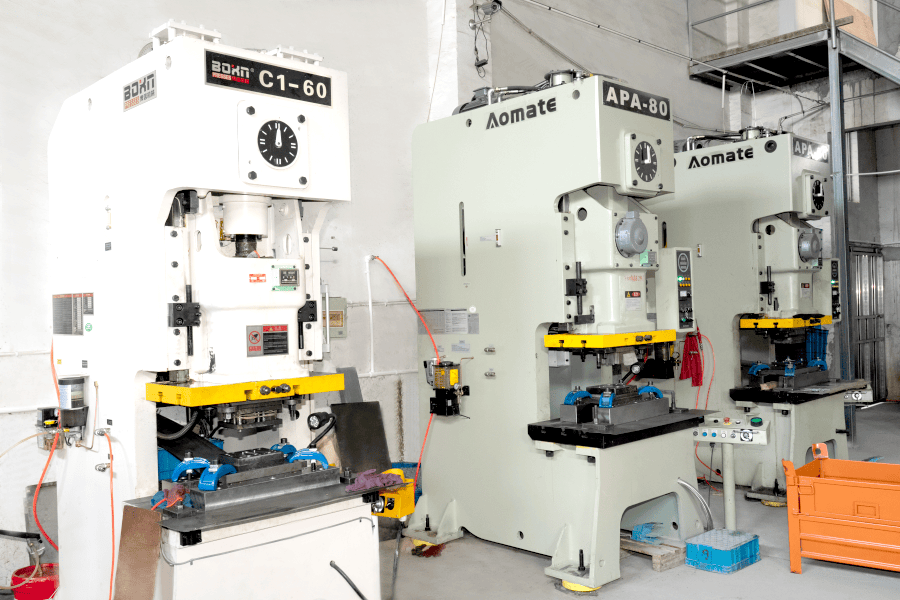
Servo presses represent one of the most significant technological advances in high precision stamping. Unlike conventional mechanical or hydraulic presses, servo presses use direct-drive servo motors that provide unparalleled control over slide motion, speed, and position.
The advantages of servo press technology for high precision stamping are numerous. Servo presses enable optimized slide motion profiles that maximize productivity and improve part quality. The programmable slide motion allows adjustments to be made for tool wear and thermal expansion of the machine tool, both of which increase accuracy. Additionally, servo presses reduce energy consumption and can be programmed with multiple stamping modes—including pendulum, drawing, pressure-holding, and pulse stamping—to suit different materials and part geometries.
For progressive die stamping, servo presses can double production capacity and save nearly 40% in energy costs through pendulum stamping mode, which shortens the empty stroke time of the punch. For deep drawing applications, servo presses can reduce slider speed in the drawing area to improve sheet metal flow and ductility while increasing empty stroke speed to maintain productivity.
Progressive Die Tooling: The Backbone of High-Volume High Precision Stamping
Progressive dies are known throughout the stamping industry as high-output workhorses capable of producing millions of parts accurately and efficiently. In high precision stamping, progressive dies are engineered with extreme precision—often using wire EDM (Electrical Discharge Machining) and precision grinding to achieve die insert tolerances of 1–2 microns.
A progressive die performs multiple operations in a single press stroke, including piercing, blanking, bending, and deep drawing. Each station in the die performs a specific operation on the metal strip as it progresses through the tool. Pilots position every hit within a tight parameter, providing high precision with each hit. This ability to perform multiple operations in one continuous process makes progressive die stamping ideal for mass production of complex components for automotive, electronics, and industrial applications.
In-Die Sensing and Quality Control
Modern high precision stamping operations deploy robotics, in-die sensing, and AI-enabled quality inspection to achieve zero-defect production and higher productivity. Smart stamping facilities use coordinate measuring machines (CMM) and optical scanners to ensure dimensional tolerance and surface integrity. These quality control systems provide real-time feedback that allows operators to detect and correct issues before they result in scrap or rework.
What Materials Are Used in High Precision Stamping?
Material selection is one of the most critical decisions in high precision stamping. The choice of material affects not only the cost of the stamped part but also how the tool runs, how stable production stays under pressure, and how well a program holds up as volumes grow and specifications evolve.
Stainless Steel for Durability and Corrosion Resistance
Stainless steel earns its place in high precision stamping applications where durability and corrosion resistance cannot be compromised. It is widely used in automotive systems, fluid transfer components, plumbing and HVAC parts, and industrial equipment. The strength and wear resistance of stainless steel support long-running programs where uptime and repeatability matter. However, forming stainless steel takes experience—higher forming forces, springback, and tool wear require careful planning and steady process control.
Copper and Copper Alloys for Electrical and Thermal Conductivity
Copper plays a critical role in high precision stamping when electrical or thermal conductivity drives part performance. Applications include electrical contacts, terminals, and connectors—all of which depend on copper to move current efficiently and manage heat without compromise. Progressive stamping often suits copper components well, especially in high-volume electrical applications. Brass, an alloy of copper and zinc, brings a combination of corrosion resistance, machinability, and visual appeal that fits well in plumbing, HVAC, and consumer-facing products.
Aluminum for Lightweight Applications
Aluminum supports high precision stamping applications where reducing weight matters without sacrificing corrosion resistance. Automotive components, consumer products, and industrial equipment programs all benefit from aluminum's lightweight properties. Many aluminum alloys perform well in high-volume progressive stamping when part geometry aligns with forming limits. However, lower strength compared to steel options may limit aluminum in certain environments, and surface marking, galling, and forming behavior require attention during tool design.
Advanced and Exotic Materials
High precision stamping is increasingly called upon to process difficult materials that others consider too challenging. Leading manufacturers regularly stamp titanium, stainless steel, aluminum, and advanced copper-based alloys such as beryllium copper. They also work with high carbon steels, non-oriented electrical steel, nickel alloys, phosphor bronze, molybdenum, and pre-coated or pre-plated materials. This expertise in hard metals and complex alloys ensures components maintain exact form, mechanical properties, and surface integrity, even at very high production speeds.
Which Industries Rely on High Precision Stamping?
High precision stamping serves a diverse range of industries, each with its own unique requirements for precision, quality, and volume. The common thread across all these applications is the need for components that meet exact specifications with consistent quality over millions of production cycles.
Automotive and Transportation
The automotive industry is the largest consumer of high precision stamping services. Automotive component manufacturing often requires high-force stamping for structural parts, emphasizing durability and repeatability over millions of cycles. High precision stamping produces safety-critical components including pedal covers, connectors, switch stampings, transmission sensors, fuel pumps, fuse panels, door locks, and ignition systems.
The shift toward electric vehicles is creating new demands for high precision stamping. Lightweight vehicle production is encouraging manufacturers to adopt advanced stamping technologies that enable the production of complex shapes with consistent dimensional accuracy. Servo stamping enables the creation of deeper, more complex forms with reduced spring-back and greater material precision, allowing for sophisticated geometries in EV body structures and battery components.
Consumer Electronics and 3C Products
The consumer electronics industry—encompassing computers, communications, and consumer electronics (3C)—demands ultra-high precision and minimal surface marking on thinner materials. High precision stamping produces connectors, lead frames, micro-connectors, precision EMI shields, and other components that require close tolerances and high repeatability with features too small to achieve with conventional stamping processes.
In electronics applications, terminals require stable current and signal transmission, with dimensional tolerances controlled within ±0.003mm. The high precision stamping of these components ensures consistent dimensional accuracy across production batches, eliminating performance variability that could compromise device functionality.
Medical Devices
The medical device industry demands some of the highest standards of precision in manufacturing. High precision stamping produces components for surgical instruments, diagnostic equipment, and implantable devices. Medical metal stampings are core components that must meet extremely high standards in precision, tolerance control, and biocompatibility.
ISO 13485 certified stamping companies understand the strict standards of the medical device industry and ensure that each part will meet or exceed those standards. Servo presses are increasingly used in medical parts processing because they can modify velocity profiles by holding pressure at the bottom of the stroke to produce more accurate and complete parts from difficult-to-form materials.
Aerospace and Defense
The aerospace industry requires precision-engineered components that meet exacting standards for safety and performance. High precision stamping produces components for aircraft systems, with commercial aircraft deliveries expected to reach 1,200 units annually by 2025, creating substantial demand for precision-engineered stamped parts. The industry's shift toward lightweight materials such as aluminum and advanced high-strength steels to meet fuel efficiency standards further drives demand for high precision stamping.
Industrial Machinery and Appliances
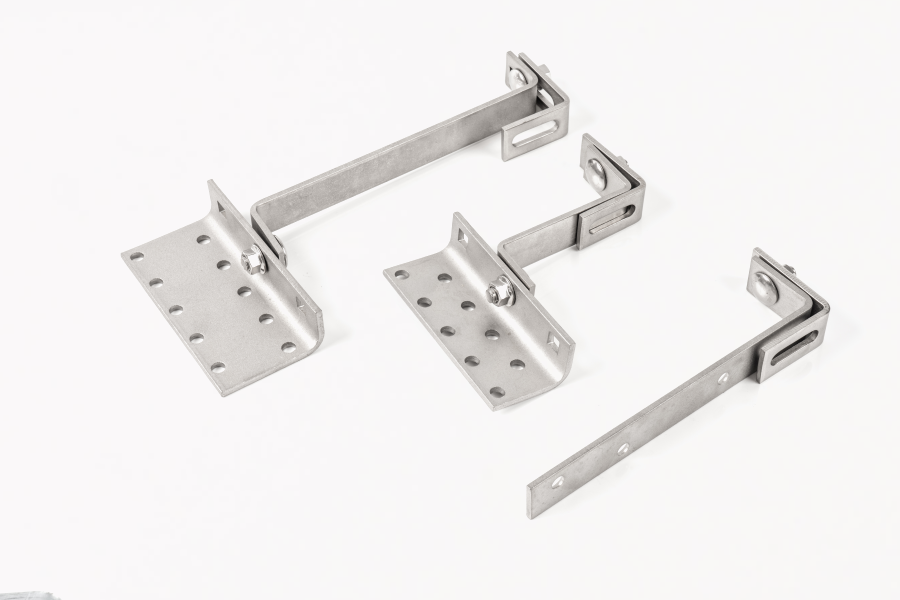
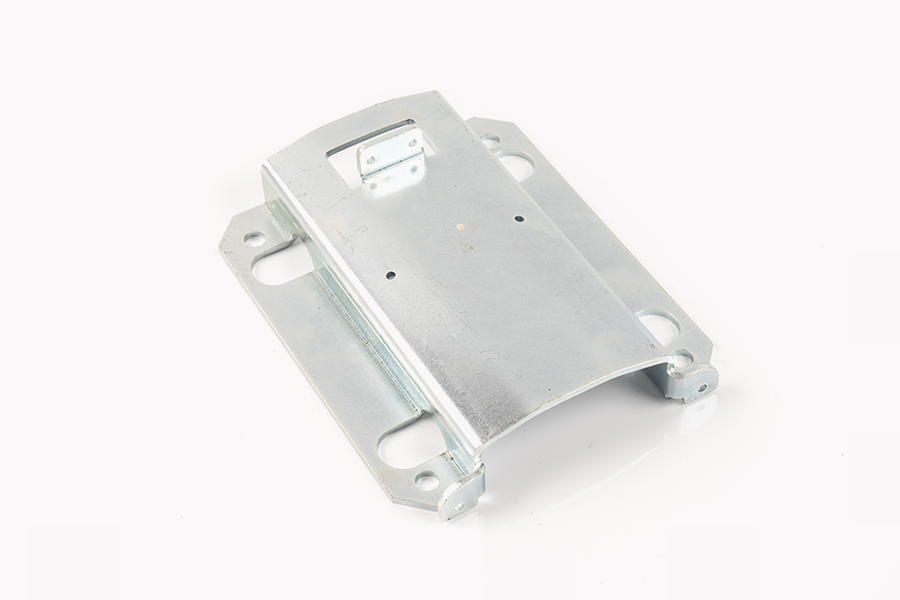
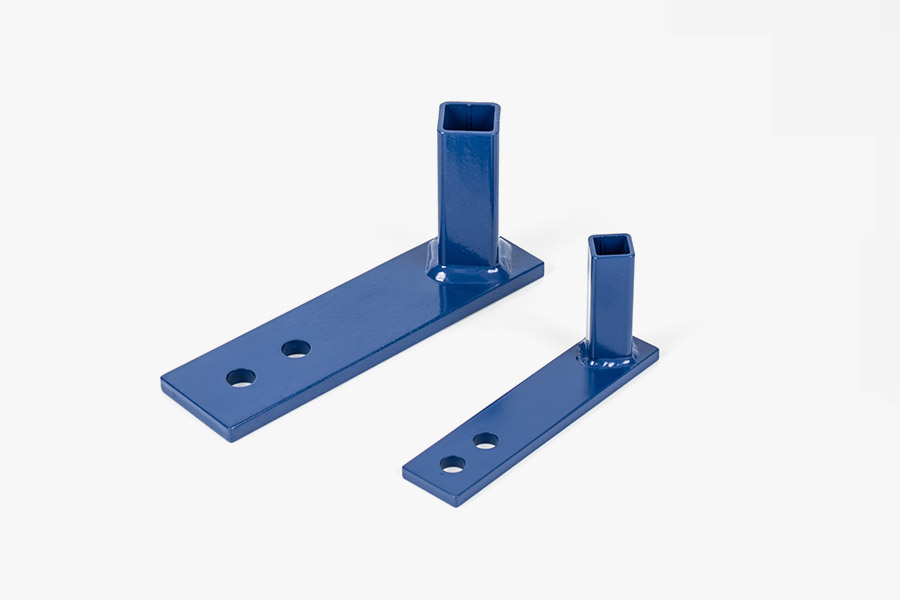
Industrial machinery and appliance manufacturers rely on high precision stamping for a wide range of components. From brackets and enclosures to heat sinks and structural parts, high precision stamping ensures structural integrity and functionality across demanding applications. The efficiency of forming intricate components in a single cycle reduces downstream processing, making it a cost-effective solution for high-demand production runs.
How to Choose the Right High Precision Stamping Partner
Selecting a high precision stamping partner is a critical decision that can impact product quality, production costs, and time to market. The following factors should guide your evaluation.
Tooling Capabilities
The quality of tooling is the single most important factor in high precision stamping. Look for partners with in-house toolmaking capabilities and a track record of producing complex, high-precision dies. The ability to design and manufacture dies with CAD/CAM software to ensure micron-level accuracy is essential. Partners with advanced machining equipment—including wire EDM and precision grinding—can achieve die insert tolerances of 1–2 microns, providing a strong foundation for high-precision stamping performance.
Press Equipment and Technology
Evaluate the press equipment available at potential partners. Servo press technology offers significant advantages for high precision stamping, including programmable slide motion, energy efficiency, and the ability to adjust for tool wear and thermal expansion. High-speed precision stamping presses capable of running at over 1,500 strokes per minute may be necessary for certain high-volume applications.
Quality Management Systems
Certifications such as IATF 16949 (automotive), ISO 13485 (medical devices), and ISO 9001 (general quality management) demonstrate a commitment to quality and process control. Look for partners with robust quality management systems that include in-process inspection, statistical process control, and advanced metrology equipment such as CMM and optical scanners.
Material Expertise
The ability to work with a wide range of materials—from common steels and aluminum to exotic alloys like titanium, Inconel, and beryllium copper—is a hallmark of a capable high precision stamping partner. Partners with deep materials science expertise can help you select the right material for your application and anticipate challenges related to formability, springback, and tool wear.
Volume and Scalability
Consider whether the partner can handle your required production volumes, whether you need prototypes, low-volume production, or high-volume runs of millions of parts per year. Progressive die stamping is most economical for high-volume production, where the high initial cost of tooling yields a very low piece-part cost.
Frequently Asked Questions About High Precision Stamping
What is high precision stamping?
High precision stamping is a metal forming process that uses advanced presses and precision-engineered tooling to produce complex metal components with extremely tight dimensional tolerances—typically measured in microns. It achieves tolerances of ±0.025mm on hole positions and ±0.05mm on blank contours, compared to conventional stamping which typically holds ±0.10mm to ±0.25mm.
What is the difference between precision stamping and ordinary stamping?
The primary difference is the level of dimensional control. Precision stamping achieves much tighter tolerances, better edge quality, and greater consistency across production runs. Precision stamping is easy to operate, has low labor requirements, and is readily adaptable to automation. Conventional stamping is suitable for less demanding applications where wider tolerances are acceptable.
What tolerances can high precision stamping achieve?
High precision stamping typically achieves tolerances of ±0.025mm on hole positions and ±0.05mm on blank contours. More advanced operations work within 20 microns, and specialized micro stamping can achieve tolerances as tight as ±1 micron. In the most demanding applications, such as automotive connectors, tolerances are controlled within ±0.003mm.
What industries use high precision stamping?
High precision stamping serves automotive and transportation, consumer electronics, medical devices, aerospace and defense, industrial machinery, and appliance manufacturing. Applications range from automotive connectors and transmission sensors to surgical instruments, diagnostic equipment, lead frames, and EMI shields.
What materials are used in high precision stamping?
Common materials include stainless steel, copper, brass, aluminum, and advanced alloys such as titanium, Inconel, Monel, Hastelloy, Kovar, beryllium copper, and phosphor bronze. Material selection depends on the application requirements for conductivity, corrosion resistance, strength, weight, and formability.
What is progressive die stamping?
Progressive die stamping is a high-volume manufacturing process that uses a die with multiple stations to perform sequential operations—including piercing, blanking, bending, and deep drawing—on a continuous strip of metal. Each station performs a specific operation as the strip progresses through the die, enabling the production of complex parts in a single continuous process.
What is a servo press and why is it important for high precision stamping?
A servo press uses direct-drive servo motors to provide precise control over slide motion, speed, and position. Servo presses enable programmable slide motion that can be optimized for different materials and part geometries, allow adjustments for tool wear and thermal expansion, and reduce energy consumption. They are essential for achieving the consistency and accuracy required in high precision stamping.
Can high precision stamping produce parts with complex geometries?
Yes. High precision stamping—particularly progressive die stamping—can produce parts with complex geometries by performing multiple operations in a single press stroke. Fine blanking, a specialized form of precision stamping, enables the production of intricate designs with tight tolerances and smooth, burr-free edges.
Is high precision stamping cost-effective for low-volume production?
High precision stamping is most cost-effective for high-volume production because the high initial cost of tooling is amortized over a large number of parts. For low-volume production, other manufacturing processes such as machining may be more economical. However, some precision stamping providers offer prototype and low-volume services using flexible tooling approaches.
How does high precision stamping contribute to sustainability?
High precision stamping supports sustainability through material efficiency—the process generates minimal scrap, much of which is reused. Stamped metal components are fully recyclable. Additionally, the increasing adoption of lightweight metals such as aluminum and high-strength steel helps manufacturers reduce carbon emissions by improving fuel efficiency. Energy-efficient servo presses and reduced lubrication consumption further enhance the sustainability of modern stamping operations.
What quality standards apply to high precision stamping?
High precision stamping operations are typically certified to industry-specific quality standards including IATF 16949 (automotive), ISO 13485 (medical devices), ISO 9001 (general quality management), and ISO 14001 (environmental management). These certifications demonstrate a commitment to quality, process control, and continuous improvement.
Can high precision stamping handle difficult-to-form materials?
Yes. Leading high precision stamping manufacturers regularly process difficult materials including titanium, stainless steel, high carbon steels, nickel alloys, and beryllium copper. Expertise in hard metals and complex alloys ensures components maintain exact form, mechanical properties, and surface integrity, even at very high production speeds.
What is the difference between fine blanking and conventional stamping?
Fine blanking produces clean, flat, and smooth edges that significantly reduce the need for extra finishing. In fine blanking, the gap between punch and die is only about one-tenth of what is typical in conventional stamping. Fine blanking delivers unmatched dimensional accuracy through triple-action presses and specialized tooling, while conventional stamping often leaves rough edges that require additional finishing.
How is quality controlled in high precision stamping?
Quality control in high precision stamping involves multiple layers of inspection including in-die sensing, coordinate measuring machines (CMM), optical scanners, and AI-enabled quality inspection. These systems provide real-time feedback to detect and correct issues before they result in scrap or rework, supporting zero-defect production goals.
What is the future of high precision stamping?
The future of high precision stamping is shaped by several trends: increasing adoption of servo press technology, integration of automation and AI-enabled quality control, growing demand for lightweight materials in automotive and aerospace applications, and the expansion of electric vehicle and renewable energy markets. The global precision stamping parts market is expected to grow from US$34,730 million in 2025 to US$47,544 million in 2031 at a CAGR of 5.4%, reflecting sustained demand across multiple industries.

 Company Profile
 +86-189-57809418
 Zouxi Village, Tangxi Town, Yinzhou District, Ningbo City, Zhejiang Province, China
Copyright © Ningbo Mingli Electric Technology Co., Ltd. All rights reserved. Custom Hardware Parts Maunfacturers
