


 Eng
Eng 
 中文简体
中文简体
 Home / News / Industry News / What Is Precision Machining, How Does Sheet Metal Processing Work, and How Can You Start a CNC Career?
 What Is Precision Machining, How Does Sheet Metal Processing Work, and How Can You Start a CNC Career?
 2026.05.14
 Industry News
What These Processes Are and Why They Matter
Precision machining is the process of removing material from a metal workpiece using computer-controlled cutting tools to achieve dimensional tolerances as tight as plus or minus 0.001 inches (0.025 millimeters) or better. It is the foundation of manufacturing sectors that require repeatable, exacting part geometries, including aerospace, medical device production, automotive, and defense. When tolerances at this scale are required, conventional hand-operated or manually guided tools are simply incapable of delivering consistent results across a production run of any size.
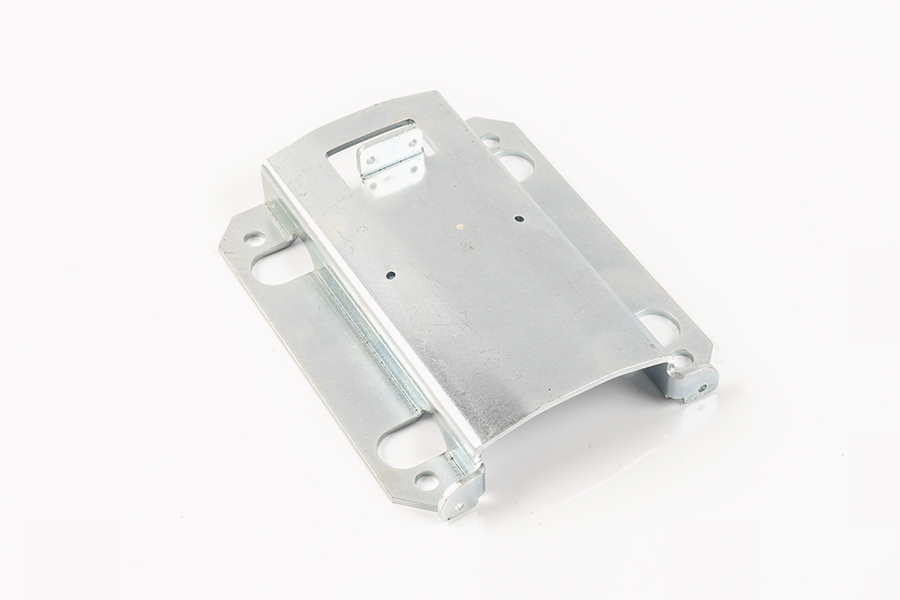
Sheet Metal Processing covers a broader family of operations including cutting, bending, forming, stamping, riveting, and finishing flat metal stock into three-dimensional parts and assemblies. High Precision Stamping is the most exacting segment of this family, using hardened die sets and progressive tooling to punch, blank, and form sheet metal components to tolerances comparable to those achieved in machining, typically within plus or minus 0.01 to 0.05 millimeters depending on material thickness and die condition.
For anyone entering the field, the practical answer to how do you become a cnc programmer is: complete a two-year associate degree or a recognized vocational certificate in CNC machining or manufacturing technology, learn at least one industry-standard CAM software platform, and accumulate hands-on machine time. The full pathway takes two to four years but opens access to a trade with median annual wages in the United States of approximately $61,000 to $75,000 according to Bureau of Labor Statistics data, with senior programmers and specialists earning considerably more.
What Is Precision Machining: Processes, Tolerances, and Industrial Applications
The Core Operations That Define Precision Machining
Precision machining encompasses a family of subtractive manufacturing operations. Each process removes material by a different physical mechanism, and each is suited to different part geometries, materials, and tolerance requirements. The most widely used precision machining operations in industrial production are:
- CNC milling: a rotating multi-point cutter removes material from a stationary or indexed workpiece in linear and contoured paths, producing flat surfaces, slots, pockets, and complex three-dimensional profiles
- CNC turning: the workpiece rotates against a fixed single-point cutting tool, producing cylindrical external and internal features including diameters, threads, tapers, and grooves
- Grinding: an abrasive wheel removes very small amounts of material at high speed, achieving surface finishes and dimensional accuracy that cutting tools cannot match, typically used as a finishing operation after milling or turning
- Electrical discharge machining (EDM): material is removed by controlled electrical spark erosion between the electrode and the workpiece, enabling the machining of hardened steels and complex internal profiles impossible with conventional cutting tools
- Honing and lapping: ultra-fine abrasive processes that achieve bore roundness and surface finish specifications required for hydraulic cylinders, engine bores, and precision valve bodies
Tolerance Standards in Precision Machining
Tolerance in precision machining refers to the permissible variation in a dimension from its nominal design value. The tighter the tolerance, the more difficult and expensive the part is to produce, because tighter tolerances demand more precise equipment, more careful process control, and more rigorous inspection. Understanding the relationship between tolerance class and production complexity is essential for anyone specifying or quoting precision machined components.
| Tolerance Class | Typical Range | Achievable Process | Typical Application |
| Coarse | Plus or minus 0.5 mm and above | Manual machining, rough milling | Structural frames, brackets |
| Medium | Plus or minus 0.1 to 0.5 mm | Standard CNC milling and turning | General machine components |
| Fine | Plus or minus 0.025 to 0.1 mm | High precision CNC, jig boring | Gears, bearings, housings |
| Very fine | Plus or minus 0.005 to 0.025 mm | Precision grinding, diamond turning | Aerospace, medical implants |
| Ultra precision | Plus or minus 0.001 mm and below | Lapping, ion beam machining | Optics, semiconductor tooling |
Materials Commonly Processed by Precision Machining
Precision machining is applied to a wide range of metallic and non-metallic materials. The choice of material affects cutting speed, tool selection, coolant requirements, and achievable surface finish. The most frequently machined materials in industrial production include aluminum alloys (6061, 7075), stainless steels (303, 304, 316, 17-4 PH), carbon steels, titanium alloys, brass, copper, and engineering plastics such as PEEK and Delrin. Aluminum alloys are the most machinable metals in common industrial use, allowing cutting speeds two to five times faster than steel, which significantly reduces cycle time and cost per part in high-volume production.
Sheet Metal Processing: The Full Workflow from Raw Stock to Finished Part
Cutting Operations That Start the Sheet Metal Processing Workflow
Sheet Metal Processing begins with cutting flat sheet stock to the required blank size and shape. The primary cutting methods used in modern sheet metal production each offer different combinations of speed, edge quality, material compatibility, and capital cost:
- Laser cutting: a focused high-power laser beam melts and ejects material along a programmed path. Modern fiber lasers can cut mild steel up to 25mm thick, stainless steel up to 20mm, and aluminum up to 15mm, with kerf widths as narrow as 0.1mm and positional accuracy of plus or minus 0.05mm or better. Laser cutting is the dominant cutting technology in precision sheet metal shops today due to its combination of speed, accuracy, and low setup cost for small batches
- Plasma cutting: an ionized gas jet at temperatures exceeding 20,000 degrees Celsius cuts electrically conductive metals rapidly. Plasma is faster and less capital-intensive than laser for thicker materials but produces a wider heat-affected zone and lower dimensional accuracy, making it better suited to structural fabrication than precision sheet metal work
- Waterjet cutting: a high-pressure water stream carrying abrasive particles cuts virtually any material without heat input, eliminating the heat-affected zone that can distort thin sheet metal or alter the metallurgical properties of heat-treated alloys. Waterjet is the preferred cutting method for titanium, hardened steel, and composite materials where thermal effects are unacceptable
- Punching and blanking: a hardened steel punch forces through the sheet into a matching die, shearing a slug from the parent material. Punching is extremely fast for high-volume production of standard hole patterns and outer profiles and is the primary cutting mechanism in both turret punch presses and progressive die stamping tools
Forming Operations: Bending, Drawing, and Roll Forming
After cutting, Sheet Metal Processing continues with forming operations that convert flat blanks into three-dimensional parts. Press brake bending is the most universal forming operation, using a punch and V-die to create precise bend angles in flat sheet. Modern CNC press brakes achieve angular repeatability of plus or minus 0.1 to 0.3 degrees, sufficient for most precision enclosure and structural bracket applications. The minimum bend radius for a given material is approximately equal to the material thickness for soft aluminum and two to three times the material thickness for harder steels and stainless steels, to avoid cracking at the bend line.
Deep drawing uses a punch to force a flat blank into a die cavity, forming a cup or box shape with no material removed, only redistributed. This process is used for producing shells, housings, and containers in high volumes. Roll forming is a continuous process where a flat strip passes through a series of roller die stations that progressively form the cross-section profile, used for long parts with consistent cross-sections such as structural channels, frames, and trim profiles.
High Precision Stamping: How Progressive Die Tooling Achieves Machining-Level Accuracy
What Distinguishes High Precision Stamping from Standard Stamping
High Precision Stamping occupies the overlap between Sheet Metal Processing and precision machining in terms of dimensional output. Standard stamping produces parts with tolerances in the range of plus or minus 0.1 to 0.3mm, acceptable for brackets, clips, and non-critical structural components. High Precision Stamping, by contrast, achieves tolerances of plus or minus 0.01 to 0.05mm on critical dimensions by combining several advanced tooling and process control factors that are absent in standard production stamping.
The factors that differentiate High Precision Stamping from standard stamping include:
- Die construction from hardened tool steels (D2, M2, or carbide) with grinding to surface finishes of Ra 0.2 micrometers or better on critical die faces
- Press equipment with closed-loop slide position control and slide parallelism maintained to within 0.005mm across the entire stroke length
- Fine blanking technology for cut edges, which uses a counter pressure plate and a serrated hold-down ring to produce shear-cut edges with surface finish and straightness comparable to machined bores, eliminating secondary drilling or reaming operations
- In-die sensing and monitoring systems that detect tool wear, strip feed errors, and dimensional drift in real time, triggering automatic shutdown before out-of-tolerance parts are produced
- Controlled lubrication systems delivering precise volumes of stamping oil to critical tool contact zones, maintaining consistent friction conditions that directly affect part dimensional stability
Applications Where High Precision Stamping Replaces Machining
High Precision Stamping becomes economically justified over precision machining when production volumes exceed approximately 10,000 to 50,000 parts per year and part geometry is achievable within the constraints of progressive die tooling. In these volume ranges, the per-part cost of a stamped component can be 70 to 90 percent lower than an equivalent machined part because stamping cycle times are measured in fractions of a second while machining cycle times are measured in minutes.
Sectors that depend on High Precision Stamping at scale include automotive fuel injection components, electronic connector terminals, medical device components such as surgical staple blanks and cardiac lead components, watchmaking components, and precision relay and switch contacts in the electronics industry. In these applications, part volumes range from hundreds of thousands to billions of units per year, making the high tooling investment of precision die sets fully justified by the per-part cost savings.
How to Rivet Sheet Metal: Methods, Tools, and Joint Design
The Direct Answer on How to Rivet Sheet Metal
The practical answer to how to rivet sheet metal depends on whether you are working in a production environment or a repair and fabrication context. In both cases, the fundamental process is the same: drill or punch a clearance hole through the sheets being joined, insert the rivet shank, and deform the tail end of the rivet to clamp the sheets together. The key to a strong, leak-free rivet joint is achieving the correct hole diameter, the correct grip length selection, and the correct installation force or pull force for the rivet type being used.
The most important practical dimension in riveting is the hole diameter relative to the rivet shank diameter. The hole should be 0.1 to 0.15mm larger in diameter than the rivet shank for structural blind rivets and solid rivets. Too small a hole damages the rivet and the workpiece during installation; too large a hole allows the rivet to tip during setting, reducing joint strength and potentially allowing the installed rivet to work loose under vibration loading.
Types of Rivets Used in Sheet Metal Work
| Rivet Type | Installation Method | Access Required | Typical Shear Strength | Best Application |
| Solid rivet | Bucking bar and rivet gun or squeeze | Both sides | High (2000 to 4000 N per rivet) | Aerospace, structural joints |
| Blind (pop) rivet | Rivet gun pulls mandrel to collapse body | One side only | Moderate (500 to 2500 N per rivet) | Enclosures, ductwork, general fabrication |
| Structural blind rivet | Mandrel retained in body after setting | One side only | High (2000 to 5000 N per rivet) | Structural assemblies with blind access |
| Drive rivet | Mandrel driven with hammer to expand body | One side only | Low to moderate | Panels, trim, non-structural attachments |
| Self-piercing rivet (SPR) | Hydraulic press forces rivet through top sheet, locks in lower sheet | Both sides (die required below) | High (3000 to 6000 N per rivet) | Automotive body assembly, multi-material joints |
Step-by-Step Process for Installing Blind Rivets in Sheet Metal
Blind rivets, also called pop rivets, are the most commonly used fastener in general Sheet Metal Processing because they require access from one side only and install in seconds with a hand or pneumatic rivet gun. The correct installation sequence is:
- Select the correct rivet diameter and grip length. The grip length must match the total thickness of all sheets being joined. Using a rivet with too short a grip results in incomplete flange formation on the blind side; too long a grip leaves excess mandrel extending past the blind face.
- Drill or punch the hole to the correct clearance diameter. For a 4.8mm (3/16 inch) rivet, the correct hole diameter is 4.9 to 5.0mm. Use a sharp drill bit and ensure the hole is perpendicular to the sheet surface to prevent the rivet from setting at an angle.
- Deburr the hole edges on both faces of the sheet stack using a deburring tool or countersink bit. Burrs prevent the rivet flange from seating flush against the sheet surface and reduce clamping force.
- Insert the rivet mandrel into the nose of the rivet gun until the rivet body is fully seated against the nose piece. Insert the rivet body into the prepared hole until the flange contacts the sheet surface with no gap.
- Operate the rivet gun with steady, controlled pulling force perpendicular to the sheet surface. The mandrel will pull through the rivet body, expanding the blind end against the far sheet face, until the mandrel breaks at the pre-scored break neck. The audible snap confirms correct installation.
- Inspect the installed rivet. The flange must be fully seated flush against the sheet surface with no rocking or tipping. The exposed mandrel stub must be flush with or below the rivet head face. Any rivet showing a gap under the flange, visible tipping, or spinning during installation should be drilled out and replaced.
How to Find the Right Metal Deburring Machine: Selection Criteria and Machine Types
Why Deburring Is a Critical Step in Sheet Metal Processing
Burrs are the raised, sharp metal projections left at cut or punched edges after any material separation operation. Every cutting process in Sheet Metal Processing, including laser cutting, plasma cutting, punching, and sawing, produces burrs of varying severity depending on the process, material type, material thickness, and condition of the cutting tools. Unremoved burrs cause assembly fit problems, injury risk to handlers, premature seal failure in fluid systems, and stress concentration points that initiate fatigue cracks under cyclic loading.
For precision sheet metal parts in industries such as electronics, medical devices, and aerospace, customer specifications frequently mandate a maximum burr height of 0.05 to 0.1mm on all edges, requiring consistent mechanical deburring rather than relying on manual hand deburring, which is slow, inconsistent, and inadequate for production volumes above a few hundred parts per day.
The Main Types of Metal Deburring Machines and Their Best Applications
Finding the right metal deburring machine begins with understanding the available machine types and matching their capabilities to your specific part geometry, material, production volume, and surface finish requirements:
- Flat sheet deburring and finishing machines (wide belt machines): these pass flat sheet metal parts through one or more abrasive belt or brush heads that simultaneously deburr, edge-round, and surface finish both faces. They are the most productive option for high volumes of flat laser-cut or punched parts. Leading suppliers include Timesavers, Lissmac, and Gecam. Throughput rates range from 2 to 8 meters per minute depending on material and required finish
- Vibratory finishing machines: parts are tumbled in a bowl or trough with abrasive media (ceramic, plastic, or steel chips) that remove burrs through continuous random impact and abrasion. Vibratory finishing is ideal for small, complex three-dimensional parts and stampings where all surfaces including internal features need burr removal. Cycle times range from 20 minutes to several hours depending on burr severity and required finish
- Drag finishing machines: workpieces are mounted on spindles and dragged through a stationary abrasive media bed at controlled speed and depth. Drag finishing is significantly faster than vibratory processing and provides better control over surface finish, making it the preferred choice for precision-machined components and medical parts where surface roughness specifications are tight
- Brush deburring machines: rotating abrasive nylon or wire brushes contact the part edges and surfaces. These are well-suited for deburring drilled holes and the edges of milled or turned components. CNC brush deburring cells can follow programmed tool paths to treat only specified edges on complex parts, avoiding over-treatment of functional surfaces
- Electrochemical deburring (ECD) machines: an electrolytic process dissolves burrs selectively at the points of highest current density, which correspond to the sharp burr projections. ECD is the only practical method for deburring internal cross-drilled holes, intersecting bores, and other features inaccessible to mechanical tools
Six Questions to Ask When Selecting a Metal Deburring Machine
To find the right metal deburring machine for a specific production requirement, evaluate the following criteria systematically before requesting quotations from machine suppliers:
- Part geometry: are the parts flat sheets, three-dimensional stampings, or machined components with internal features? Flat sheet deburring machines handle the first category; vibratory, drag, or ECD machines are needed for the others
- Material type and hardness: aluminum, copper, and mild steel deburr readily with most media types; hardened steels and titanium require aggressive abrasive media or electrochemical methods
- Required production throughput: how many parts or kilograms per hour must the deburring operation process to keep pace with upstream cutting and forming operations? This drives the choice between batch and continuous process machines
- Surface finish requirement: is a functional deburr (burr removal only, surface finish not critical) sufficient, or does the process also need to achieve a specific Ra surface roughness value or a visible edge radius?
- Part size and weight limits: confirm that the machine's working envelope, part weight capacity, and fixturing options are compatible with the largest and heaviest parts in your production mix
- Automation integration: can the machine accept robotic loading and unloading, and does it offer data output for integration with production management systems? For volumes above a few hundred parts per shift, automated loading quickly justifies its investment through labor cost reduction
How Do You Become a CNC Programmer: Education, Skills, and Career Pathway
What a CNC Programmer Actually Does
Before addressing how do you become a cnc programmer, it is worth being precise about what the role involves in a modern manufacturing environment. A CNC programmer translates a part design from a CAD drawing or 3D model into a machine control program (NC code, commonly called G-code) that directs a CNC machine tool to cut, turn, mill, or grind the part to the specified dimensions and surface finish. The programmer selects cutting tools, defines cutting speeds and feed rates, establishes workholding strategy, and sequences the operations in an order that produces the part efficiently with minimum setup changes.
In most modern shops, CNC programming is performed using a CAM (computer-aided manufacturing) software platform rather than manually writing G-code line by line. Popular CAM software platforms include Mastercam, Fusion 360, Siemens NX CAM, Hypermill, and Edgecam. Proficiency in at least one major CAM platform is a non-negotiable requirement for employment as a CNC programmer in a production manufacturing environment.
The Education Pathway to Becoming a CNC Programmer
The most direct education route to becoming a CNC programmer follows this sequence:
- Complete a secondary education with strong mathematics and technical drawing: algebra, geometry, and trigonometry are used constantly in CNC programming for coordinate calculations, tool path geometry, and tolerance analysis. Mechanical drawing or CAD drafting courses provide essential familiarity with engineering drawings and GD&T (geometric dimensioning and tolerancing) notation
- Enroll in a CNC machining or manufacturing technology program: community colleges and technical institutes in the United States offer two-year associate degree programs and one-year certificate programs that cover manual machining fundamentals, CNC machine operation, blueprint reading, metrology, and introductory CAM programming. The National Institute for Metalworking Skills (NIMS) credential is a recognized industry certification that many programs incorporate
- Learn a CAM software platform in depth: most programs include introductory CAM training, but employers expect candidates to be production-capable in a specific platform. Autodesk Fusion 360 is free for students and small shops and is widely used for learning. Mastercam is the most widely used production CAM platform in North American job shops
- Gain machine operating experience: programming ability without machine experience is not sufficient for most employers. Time spent operating CNC mills and lathes builds the practical understanding of how programs execute in the real world, including recognizing tool interference, understanding workholding behavior, and diagnosing cutting problems from sound and chip formation
- Enter the field as a CNC operator or machinist and advance to programming: the most common career path is starting as a machine operator or CNC machinist, demonstrating reliability and mechanical aptitude, and progressively taking on setup and then programming responsibilities. Many experienced programmers follow this path rather than entering programming directly from school
Salary Expectations and Career Progression for CNC Programmers
Compensation for CNC programmers varies significantly based on experience level, geographic location, industry sector, and the complexity of work being programmed. The following data is based on United States labor market information:
| Experience Level | Typical Annual Salary (USD) | Typical Role Title | Primary Responsibilities |
| Entry level (0 to 2 years) | $42,000 to $55,000 | CNC Operator, Junior Machinist | Machine operation, setup from existing programs |
| Mid-level (3 to 6 years) | $55,000 to $75,000 | CNC Programmer, Machinist | CAM programming, setup, first-article inspection |
| Senior (7 to 15 years) | $75,000 to $100,000 | Senior CNC Programmer, Lead Programmer | Complex multi-axis programming, process optimization |
| Specialist or management (15 or more years) | $95,000 to $130,000 or more | Manufacturing Engineer, Programming Manager | Process development, team leadership, quoting |
Key Technical Skills That Accelerate Career Growth in CNC Programming
Beyond the baseline of CAM software proficiency and machine knowledge, the following technical skills differentiate programmers who advance quickly from those who remain at the operator level:
- Multi-axis programming: 4-axis and 5-axis simultaneous CNC machining enables the production of complex aerospace and medical parts in a single setup that would otherwise require multiple operations. Programmers with multi-axis CAM capability command significantly higher salaries than those limited to 2.5-axis milling
- GD&T interpretation: geometric dimensioning and tolerancing is the international language of engineering drawings for precision components. A programmer who cannot read GD&T callouts correctly cannot ensure that the program they create will produce a conforming part
- Cutting tool technology knowledge: understanding carbide grades, coating types, insert geometry, and cutting data optimization enables programmers to maximize metal removal rates and tool life, directly reducing manufacturing cost per part
- Metrology and inspection: coordinate measuring machine (CMM) programming and operation, the use of precision hand gauges, and the interpretation of inspection reports are increasingly expected of senior programmers who must verify that their programs produce conforming parts
- Automation and robotics integration: as CNC machines are increasingly paired with robot loading systems and automated palletizing, programmers who understand robot programming interfaces and automated cell management software are positioned for roles in advanced manufacturing environments
Quality Control in Precision Machining and Sheet Metal Processing: Measurement Methods and Standards
Inspection Tools Used in Precision Manufacturing
Quality control in precision machining and Sheet Metal Processing requires measurement tools whose accuracy significantly exceeds the tolerances being inspected. The general rule is that the measurement system should have an accuracy of at least one tenth of the tolerance being measured, known as the 10-to-1 gauging ratio. For a tolerance of plus or minus 0.05mm, the measurement system should therefore be accurate to plus or minus 0.005mm or better.
Commonly used measurement tools in precision manufacturing include:
- Digital outside and inside micrometers: resolution of 0.001mm, suitable for diameter and thickness measurements on turned components and sheet metal thickness verification
- Digital vernier calipers: resolution of 0.01mm, suitable for linear dimensions, depths, and step heights in medium-tolerance applications
- Coordinate measuring machines (CMM): three-axis or five-axis touch probe systems that measure three-dimensional part geometry against the nominal CAD model, generating full dimensional reports. CMMs are the standard inspection tool for precision machined components and complex High Precision Stamping parts
- Optical comparators and vision systems: project a magnified silhouette of a part onto a screen for comparison against a master overlay, or use digital cameras and image processing to measure edge positions and hole locations automatically
- Surface profilometers: measure surface roughness (Ra, Rz values) on machined and ground surfaces, confirming compliance with finish specifications that affect sealing, friction, and fatigue life
Relevant International Standards for Precision Metal Components
Precision machined and stamped components for industrial customers are typically produced and inspected to established international standards that define acceptable quality levels, test methods, and documentation requirements. The most frequently referenced standards in precision metal manufacturing include ISO 2768 for general dimensional tolerances on machined parts, ISO 286 for limits and fits for cylindrical features, ASTM material specifications for metal alloys, and AS9100 (aerospace quality management system) or ISO 13485 (medical device quality management system) for sector-specific quality program requirements. Customers in aerospace, medical, and defense sectors almost universally require documented compliance with one of these quality management system standards as a condition of supplier approval.
Frequently Asked Questions
1. What is precision machining and how is it different from regular machining?
Precision machining is a category of CNC-controlled material removal processes that achieve dimensional tolerances of plus or minus 0.025mm or tighter, using advanced machine tools, cutting tool technology, and process control. Regular or general machining typically works to tolerances of plus or minus 0.1 to 0.5mm and uses standard equipment without the same level of thermal compensation, vibration control, or in-process gauging. The difference in tolerance capability is driven by the quality of the machine tool, the programming approach, the cutting tool selection, and the inspection methodology used throughout the process.
2. What are the first steps in Sheet Metal Processing for a new part design?
The first practical step is converting the 3D part design into a flat blank development, also called an unfolded pattern, that accounts for bend allowances so that after all bends are formed the part achieves its nominal dimensions. Once the flat blank pattern is confirmed, the appropriate cutting method (laser, punch, or waterjet) is selected based on material type, thickness, and required edge quality. Tooling for bending is then selected or designed, and a prototype batch is produced and inspected before committing to production tooling investment.
3. How to rivet sheet metal when you only have access from one side?
When access from only one side is available, use blind rivets (pop rivets) or structural blind rivets. Drill the hole to the correct clearance diameter, select a rivet with a grip length matching the total sheet thickness, insert the rivet body into the hole, and operate the rivet gun to pull the mandrel through the body until it snaps at the break neck. Structural blind rivets (such as Huck BOM or Gesipa Bulb-Tite types) are preferred over standard pop rivets when the joint must carry significant structural load, as the retained mandrel provides substantially higher shear and tensile strength.
4. How to find the right metal deburring machine for laser-cut flat parts?
For laser-cut flat sheet metal parts, a wide-belt flat sheet deburring and finishing machine is the most appropriate solution. Select a machine with a working width that accommodates your largest sheet size, with at least two heads: one abrasive belt head for burr removal and one brush head for edge rounding and surface finishing. Confirm the machine's minimum part thickness specification, as very thin sheets (below 0.5mm) can be difficult to transport through roller-feed deburring machines without buckling. Request material test cuts from machine suppliers before purchasing to verify performance on your specific material and thickness range.
5. What does High Precision Stamping offer over standard stamping?
High Precision Stamping achieves dimensional tolerances of plus or minus 0.01 to 0.05mm on critical features, comparable to precision machining, while producing parts at cycle times of fractions of a second. Standard stamping achieves tolerances of plus or minus 0.1 to 0.3mm. The tighter tolerances of High Precision Stamping are achieved through hardened tool steel dies ground to high surface finish, fine blanking technology for cut edges, closed-loop press slide control, and in-die monitoring systems. This makes it viable for connector terminals, medical device components, watch parts, and fuel injection components where machining-level accuracy is required at production volumes that make machining economically impractical.
6. How do you become a cnc programmer without a four-year degree?
A four-year degree is not required to become a CNC programmer. The most common pathway is a two-year associate degree or one to two-year certificate program in CNC machining or manufacturing technology at a community college or technical institute, combined with hands-on machine time. Completing a NIMS (National Institute for Metalworking Skills) certification strengthens the credential for employment. Many successful CNC programmers begin as machine operators, learn CAM software independently or through employer training, and advance into programming roles within three to five years of entering the field.
7. What is the difference between a CNC programmer and a CNC operator?
A CNC operator runs existing programs on CNC machines: loading parts, starting programs, monitoring the cutting process, checking finished parts, and making minor offset adjustments within defined limits. A CNC programmer creates the programs that operators run: selecting tools, defining cutting parameters, writing or generating G-code using CAM software, testing programs on the machine, and optimizing cycle time and part quality. In smaller shops, one person may perform both roles. In larger production environments, programming and operating are separate specializations with programming typically commanding higher compensation.
8. What materials can be processed by High Precision Stamping?
High Precision Stamping is applicable to most metals supplied in sheet or strip form, including cold-rolled steel, stainless steel, aluminum alloys, copper, brass, phosphor bronze, titanium, and nickel alloys. The material must have sufficient ductility to deform without cracking during the stamping operations. The most commonly stamped materials in high-precision applications are stainless steel (301, 304) and copper alloys for electrical connector terminals, cold-rolled steel for automotive and appliance components, and aluminum alloys for lightweight structural and electronic hardware applications.
9. How do I know if my sheet metal parts need a deburring machine or if hand deburring is sufficient?
Hand deburring is sufficient only when production volumes are very low (fewer than 50 to 100 parts per day), part geometry is simple and accessible, and there is no formal burr height specification from the customer. As soon as any of the following apply, a mechanical deburring machine becomes justified: production volumes exceed 200 parts per shift, the customer specification states a maximum burr height (typically 0.05 to 0.1mm), the parts will be used in sealing, fluid handling, or electrical applications where burrs cause functional failure, or the labor cost of hand deburring exceeds the amortized cost of a machine over a 12 to 24 month period.
10. What is the relationship between precision machining and Sheet Metal Processing in a manufacturing workflow?
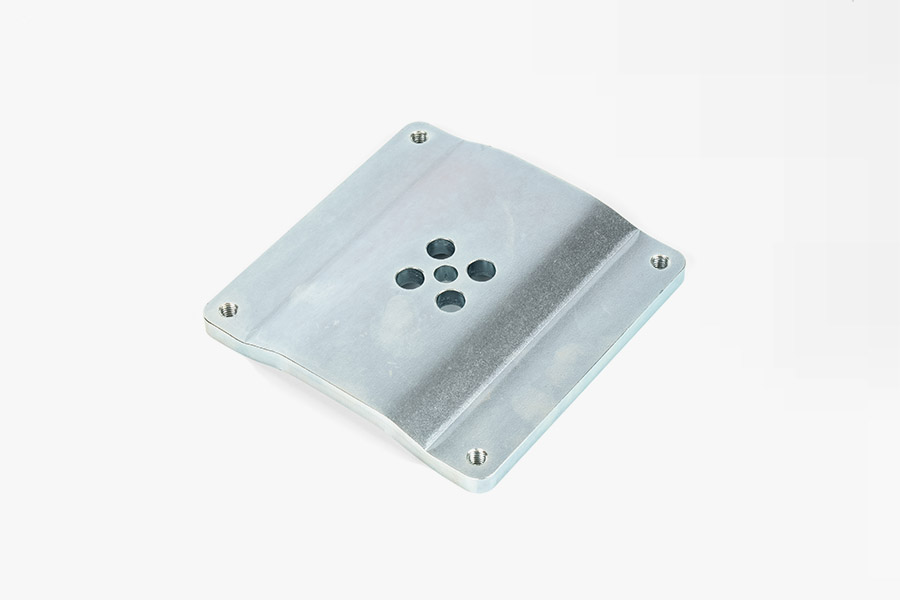
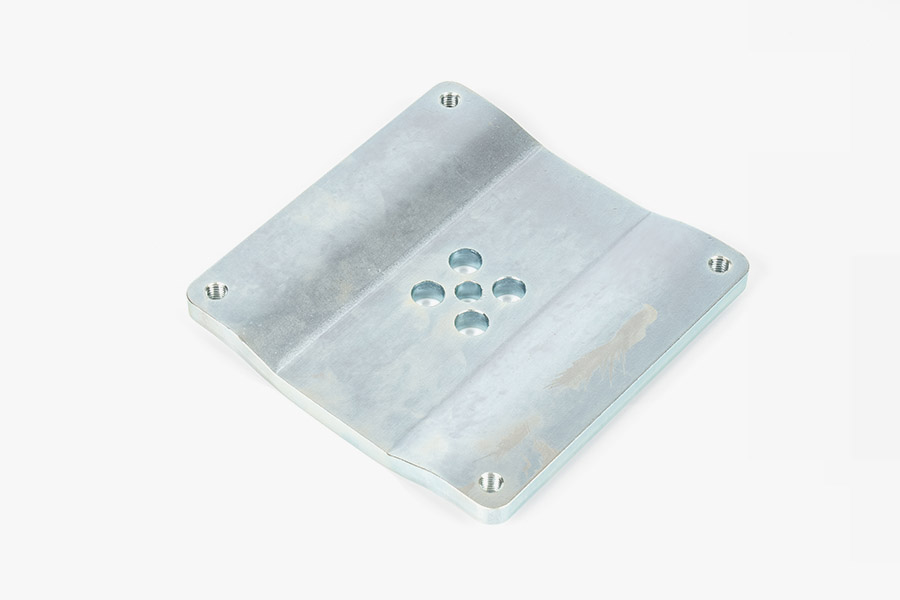
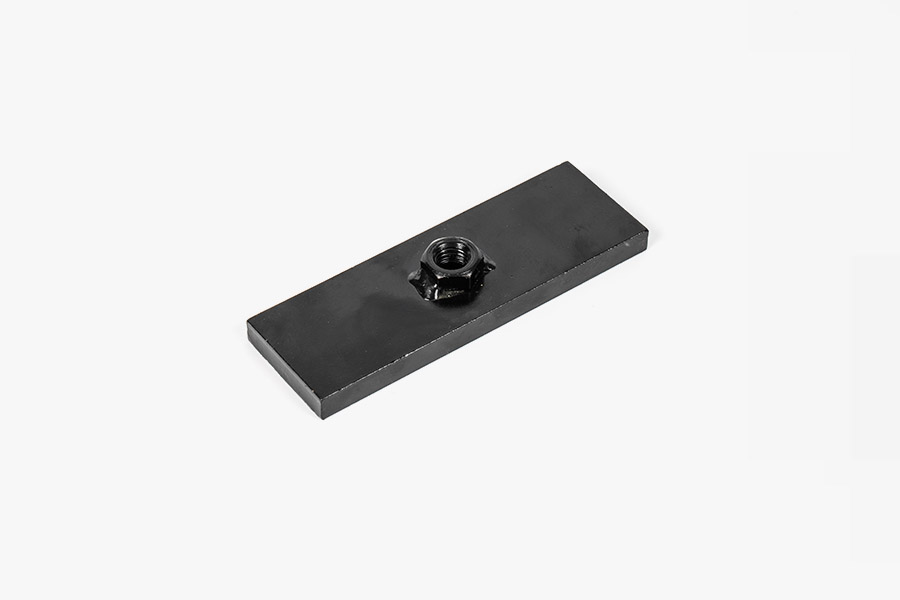
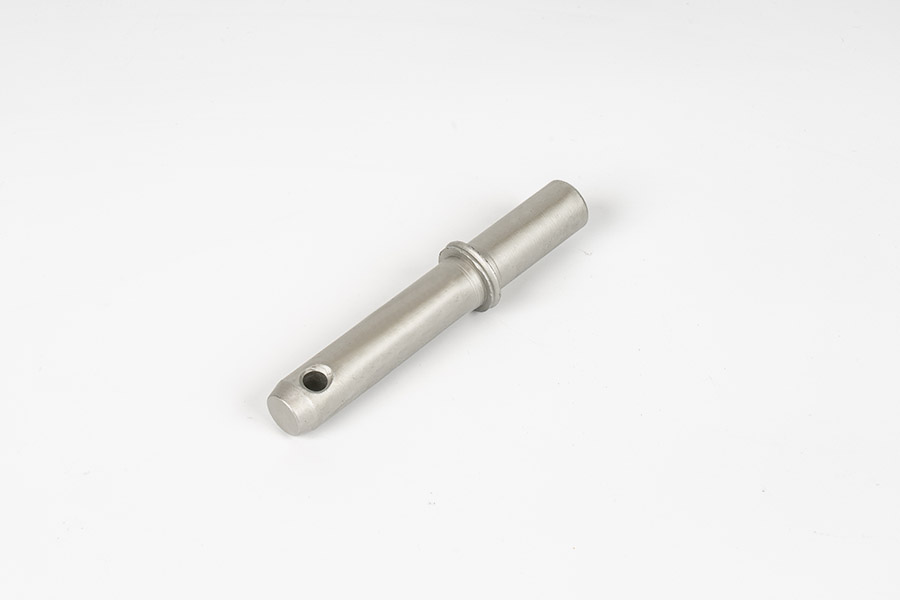
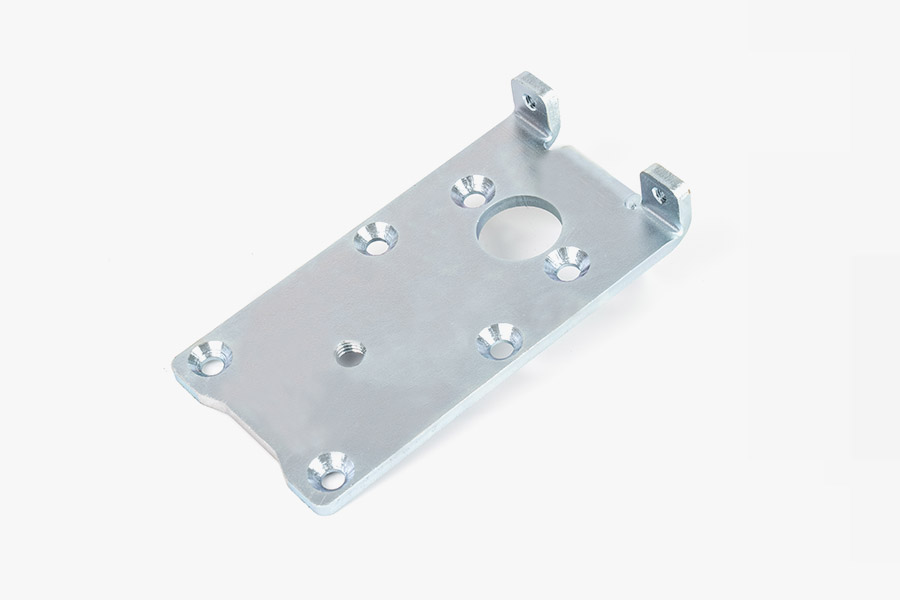
Precision machining and Sheet Metal Processing are complementary rather than competing processes, and many complex assemblies require both. Sheet Metal Processing produces thin-walled enclosures, brackets, frames, and structural components that would be prohibitively expensive to machine from solid stock. Precision machining produces the threaded inserts, bushings, precision bores, shafts, and close-tolerance mating features that are beyond the capability of sheet metal forming. In a typical electromechanical assembly, the enclosure and structural chassis are sheet metal fabrications, while the precise mounting features, fastener inserts, and functional mechanical components are precision machined parts that are assembled together into the final product.

 Company Profile
 +86-189-57809418
 Zouxi Village, Tangxi Town, Yinzhou District, Ningbo City, Zhejiang Province, China
Copyright © Ningbo Mingli Electric Technology Co., Ltd. All rights reserved. Custom Hardware Parts Maunfacturers
