


 Eng
Eng 
 中文简体
中文简体
 Home / News / Industry News / Precision Metal Stamping: Process, Benefits, Materials, and Supplier Selection
 Precision Metal Stamping: Process, Benefits, Materials, and Supplier Selection
 2026.09.10
 Industry News
Precision metal stamping is a high-volume manufacturing process that converts flat metal strip or coil into components with controlled dimensions, good surface finish, and repeatable quality. It is often the most cost-effective production method when a part is needed in large quantities, but the actual success of a project depends on tooling design, material selection, process control, and whether the supplier can manage secondary operations such as welding, threading, finishing, and assembly.
What Is Precision Metal Stamping?
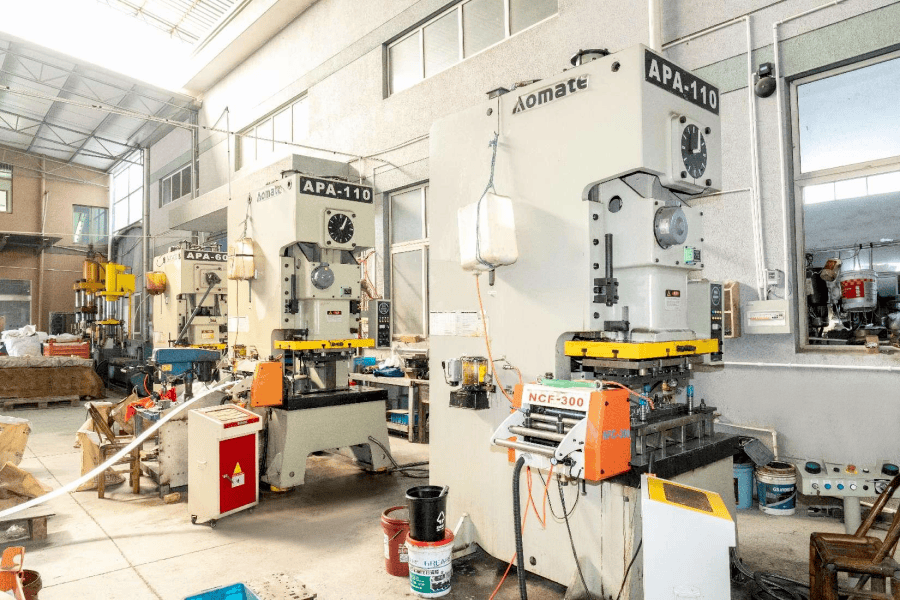
Precision metal stamping is not a single operation; it is a family of sheet-metal forming operations performed with a press and a set of dies. The word "precision" means the process can hold tight dimensional tolerances from one piece to the next, even at high volume. It also means the stamper controls tool wear, material feeding, lubrication, and press speed so that the part does not drift out of specification during a long production run.
What Happens Inside a Precision Stamping Operation
| Operation | What it does | Typical result |
|---|---|---|
| Blanking | Cuts a flat blank from coil or sheet metal | Contoured outside shape with a clean edge |
| Piercing | Punches holes or internal features | Holes, slots, and openings for fasteners or airflow |
| Forming | Shapes material without removing metal | Bends, flanges, and raised sections |
| Drawing | Stretches material into a die cavity | Cups, shells, and deeper enclosures |
| Coining | Compresses material in a closed die | Improved flatness, surface detail, and dimensional consistency |
Production Methods: Progressive, Transfer, Deep Drawing, and Fine Blanking
The production method affects achievable tolerances, tooling cost, and the geometric shapes you can create. Four methods are common in precision metal stamping.
- Progressive die stamping: A metal strip advances through several stations, with each station performing one operation. This is the fastest method for small and medium parts produced in very high volumes.
- Transfer die stamping: Individual blanks are transferred between dies, allowing deeper or more complex parts and more space for features.
- Deep drawing: A punch pushes material into a cavity to form seamless, often cylindrical shapes such as housings, battery cans, and cups.
- Fine blanking: A specialized press and die produce very clean sheared edges, close flatness, and tighter dimensional control than conventional stamping.
Many parts do not require an exotic method. The important thing is that the supplier has a controlled process and tooling suited to the part geometry.
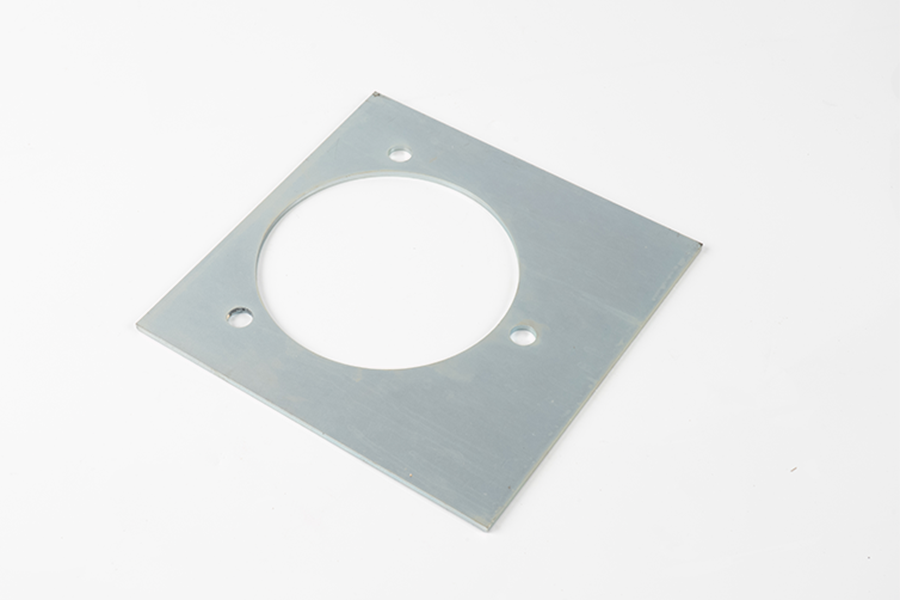
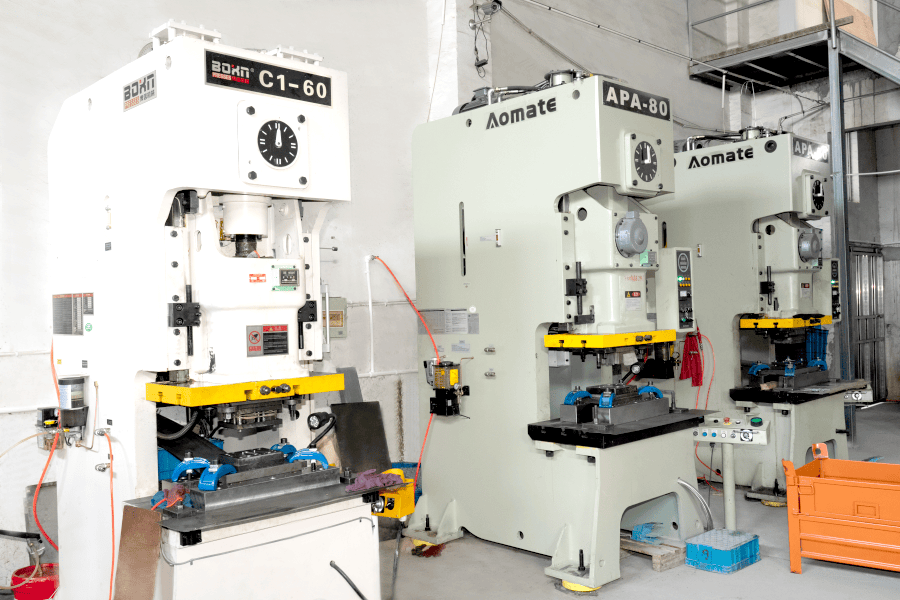 Precision Metal Stamping Services with Multi-Station Progressive DiesThis supplier uses progressive and deep-drawing techniques to produce complex stampings with tight tolerances, supporting over 30 metals and high-volume production, making it a strong option for manufacturable part design.View Product →
Materials Used for Precision Stamped Parts
Material choice affects both manufacturability and final performance. Low-carbon steel is the economic default. Stainless steel adds corrosion resistance. Aluminum reduces weight. Copper and brass provide electrical conductivity. Nickel alloys handle high temperatures and demanding environments.
| Material | Common applications |
|---|---|
| Low-carbon steel | Brackets, mounting plates, structural hardware |
| Stainless steel | Medical devices, food equipment, outdoor components |
| Aluminum | Heat sinks, lightweight housings, shielding covers |
| Copper and brass | Terminals, connectors, busbars, contact springs |
| Nickel alloys | High-temperature or corrosive applications |
Material thickness, temper, and surface finish also influence tolerance. A supplier with real production experience will recommend a material grade that balances performance, cost, and formability.
Precision Metal Stamping Applications
Precision stamped parts appear in almost every industry that needs strong, small, repeatable metal components.
- Automotive: brackets, seat components, connectors, and structural small parts
- Electrical and electronics: terminals, contacts, busbars, connector shells, and shielding components
- Appliances: mounting plates, motor laminations, and interior brackets
- HVAC: heat exchanger fins, housings, and ductwork components
- Construction and hardware: hinges, anchors, clips, and fasteners
- Fire protection: sprinkler components, valve parts, and mounting hardware
Many of these parts are later processed with tapping, welding, plastic overmolding, or surface finishing. The ability to handle those steps in one supply chain reduces handling time and quality risk.
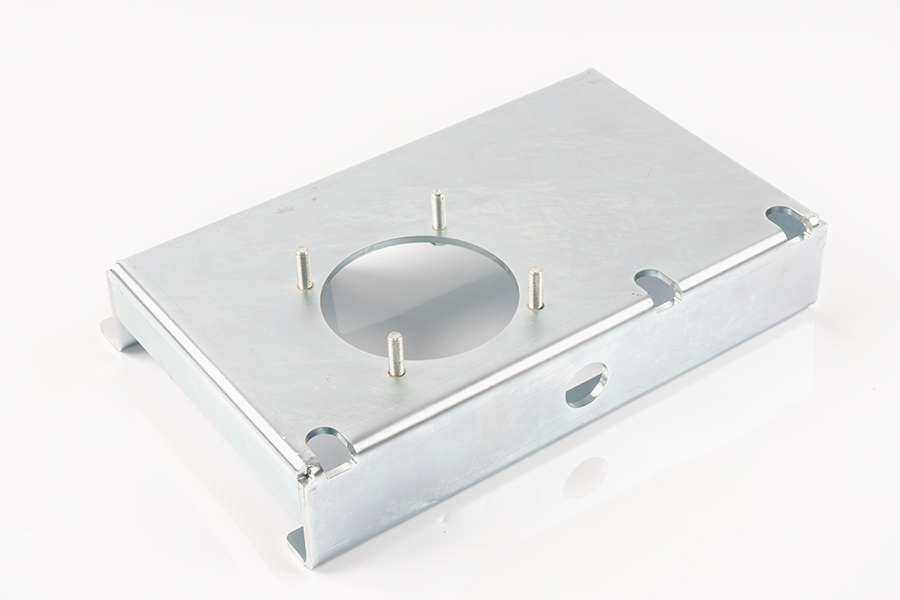
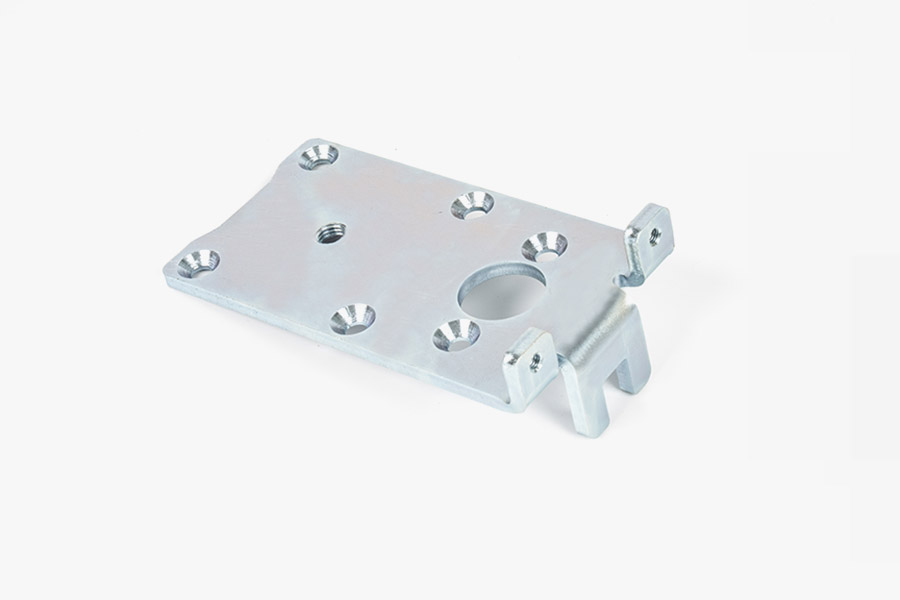
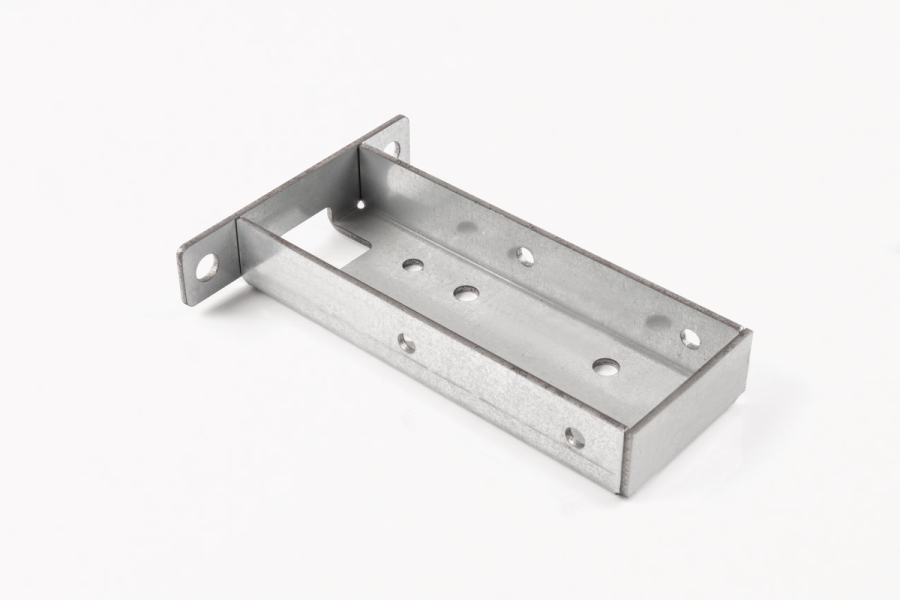 Custom Stamped Metal Parts for Automotive and Electronics IndustriesWith multi-station and progressive die capabilities, these stamped parts deliver dimensional accuracy, strength, and flatness for frames, motor housings, and connectors, backed by dedicated punching machines and fast turnaround.View Product →
Tolerances and Quality Control
Tolerance is the most visible measure of precision, but precision stamping also includes edge quality, flatness, and positional accuracy. Typical values are only a starting point because achievable tolerances depend on material, part size, tool condition, and press setup.
| Feature | Commercial stamping | Precision stamping |
|---|---|---|
| Linear dimensions | ±0.13 mm typical | ±0.05 mm or better |
| Hole position | ±0.08–0.13 mm | ±0.025–0.05 mm |
| Bend location | ±0.15 mm typical | ±0.08 mm or better |
| Flatness | 0.25 mm or less | 0.10 mm or less |
Quality control starts before production. The supplier should review the drawing, build the die with the tolerance strategy in mind, and validate the first article before mass production. For a practical explanation of the variables involved, read this summary of how stampers control dimensional tolerance and form/position errors.
Design and Cost Considerations
Precision metal stamping becomes economical when the part volume is high enough to absorb tooling costs. To get the best result, keep the design as manufacturing-friendly as possible.
- Specify the loosest tolerance that works. Tighter tolerances increase tooling and inspection costs.
- Avoid bend radii smaller than the material thickness. Sharp bends can cause cracking or excessive springback.
- Keep holes away from bends and edges. Short distances between features can cause distortion.
- Use standard material thicknesses. Non-standard coils add lead time and cost.
- Think about volume. Progressive die stamping rewards large runs; lower volumes may be better served by simpler tooling or prototyping.
The cost structure has two main parts: tooling and piece price. Tooling includes design, die build, tryout, and maintenance. Piece price includes material, press time, labor, secondary operations, and packaging. A well-built die usually increases the upfront investment, but it lowers piece price and reduces downtime in long production runs.
How to Choose a Precision Metal Stamping Supplier
Choosing the right supplier is as important as choosing the right process. Look for evidence of in-house manufacturing rather than a company that only forwards drawings to a factory.
- Manufacturing capabilities: Check for progressive stamping, transfer stamping, deep drawing, fine blanking, and useful secondary operations such as welding, internal threading, and plastic processing.
- Quality system: Ask about documented inspection procedures, measurement equipment, control plans, and traceability.
- Engineering support: A good supplier gives design-for-manufacturing feedback before tooling is cut.
- Capacity and lead time: Verify press capacity, material supply relationships, and the ability to meet delivery promises.
- Export logistics: If you buy internationally, proximity to a major port reduces freight risk and lead time.
A supplier that can combine stamping with sheet-metal processing, welding, internal threading, and assembly can simplify your supply chain. Fewer handoffs mean fewer tolerance problems and less administrative work.
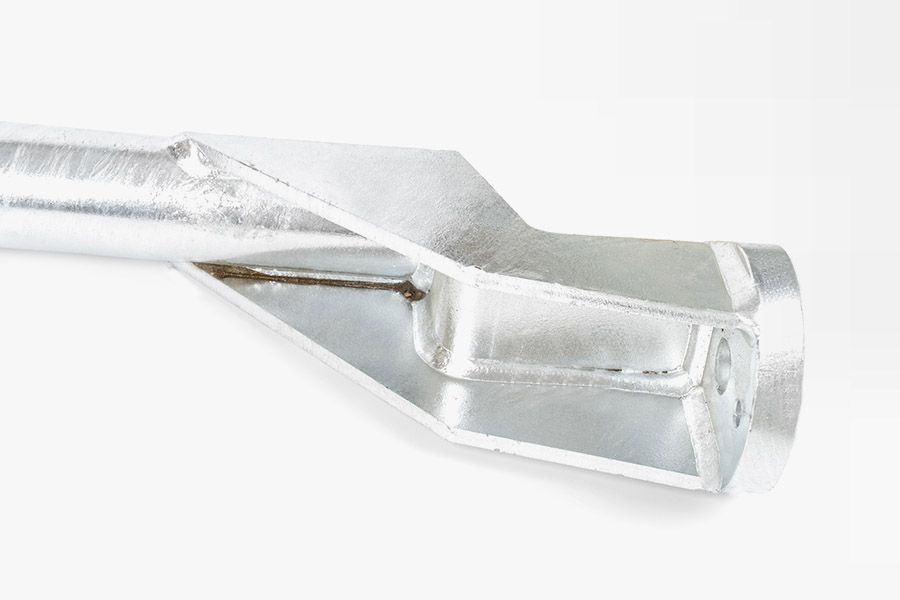
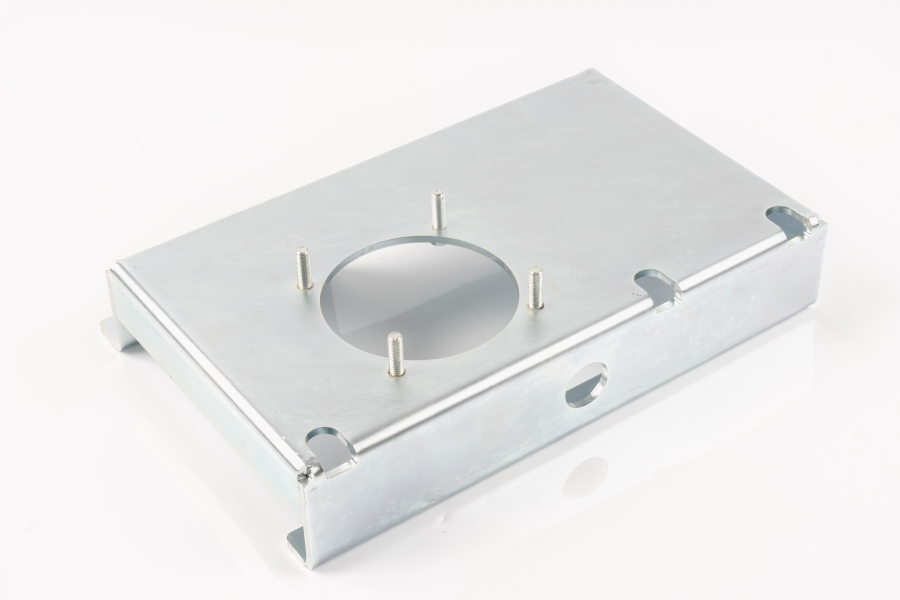 In-House Fabricated Assemblies with Finishing and Secondary OperationsThis manufacturer offers integrated services such as laser cutting, welding, tapping, and painting to deliver ready-to-use assemblies, reducing supply chain handoffs and ensuring consistent quality from raw material to final product.View Product →
Final Thought
Precision metal stamping is not a magic formula. It rewards early collaboration, realistic tolerances, and a supplier who understands how tooling, material, and inspection interact. Share your full drawing and application, ask for design feedback, and verify the first article before committing to full-scale production. With the right process and partner, stamped parts can hold tight tolerances, survive demanding service conditions, and remain cost-effective across large production volumes.


 Company Profile
 +86-189-57809418
 Zouxi Village, Tangxi Town, Yinzhou District, Ningbo City, Zhejiang Province, China
Copyright © Ningbo Mingli Electric Technology Co., Ltd. All rights reserved. Custom Hardware Parts Maunfacturers
